Kibale Forest National Park
Kibale Forest National Park: The Heart of Primate Safaris in Uganda. Where the Forest Speaks in Primate Voices.
At dawn, the forest stirs with sound. Leaves rustle overhead. Distant calls echo through the canopy. Then comes the unmistakable pant-hoot of a chimpanzee, rising and falling like a conversation carried on the wind. Kibale Forest National Park is alive in a way few places on Earth can match. It is not just a forest. It is a thriving primate kingdom and the undisputed center of chimpanzee experiences in Africa.
Located in western Uganda, Kibale Forest National Park Uganda has earned its reputation as the continent’s leading primate destination. With the highest density of chimpanzees in East Africa and an extraordinary variety of monkey species, the park offers intimate wildlife encounters rooted in conservation and research. For travelers seeking meaningful primate safaris in Uganda, Kibale delivers depth, authenticity, and lasting impact.
This comprehensive guide explores Kibale Forest National Park in detail. It explains what makes the park exceptional, how chimpanzee trekking works, and why Kibale remains a cornerstone of Uganda chimpanzee trekking experiences.
Key Facts About Kibale Forest National Park
- Location: Western Uganda, near the foothills of the Rwenzori Mountains
- Country: Uganda
- Area Covered: Approximately 795 square kilometers
- Year Established: 1993
- Forest Type: Tropical rainforest with grassland and swamp pockets
- Altitude Range: About 1,100 to 1,600 meters above sea level
- Primate Significance: Home to one of Africa’s highest concentrations of primates
Kibale Forest National Park plays a vital role in regional biodiversity. Its protected status safeguards critical habitat for primates, birds, and forest-dependent species.
Location and Landscape: A Forest Built for Primate Life
Kibale Forest National Park sits in western Uganda, forming a natural corridor between lowland forests and montane ecosystems. The park’s position near fertile volcanic soils has shaped a lush, productive landscape that supports abundant food sources year-round.
The terrain is gently undulating, with forested hills, river valleys, and occasional swamp areas. Tall hardwood trees dominate the canopy, while fig trees provide essential food for chimpanzees and other primates. The forest floor remains relatively open, allowing trekkers to move through dense vegetation without extreme difficulty.
This combination of altitude, rainfall, and forest structure explains why Kibale supports such remarkable primate diversity. The environment favors social species that depend on stable food availability and interconnected forest corridors.
Biodiversity and Wildlife: Why Kibale Is the Primate Capital of the World
Kibale Forest National Park is often called the “Primate Capital of the World,” and the title is well earned.
Chimpanzees of Kibale
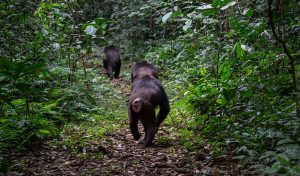
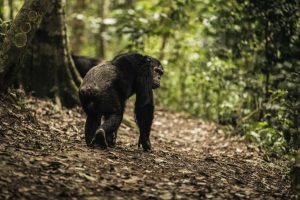
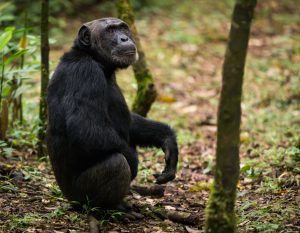
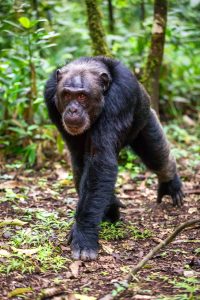
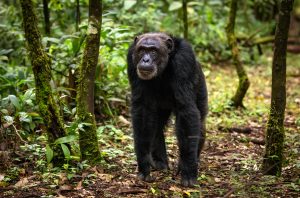
Kibale protects one of the largest populations of wild chimpanzees in Africa. These intelligent primates live in complex social groups, displaying behaviors that mirror human relationships. Grooming, cooperation, play, and conflict all unfold naturally during forest encounters.
Chimpanzees in Kibale are well studied, allowing guides to interpret behavior accurately. Visitors gain insight into dominance hierarchies, communication methods, and feeding strategies during encounters.
Other Primates
Beyond chimpanzees, Kibale is home to more than a dozen primate species. These include red colobus monkeys, black-and-white colobus, L’Hoest’s monkeys, blue monkeys, olive baboons, and grey-cheeked mangabeys.
Seeing multiple primate species in one walk is common. This density makes Kibale unique among African forest parks.
Other Wildlife and Plant Life
While primates dominate attention, Kibale also supports forest elephants, bush pigs, duikers, and a rich bird population. Over 370 bird species inhabit the park, including many forest specialists.
Plant diversity is equally impressive. Ancient trees, medicinal plants, and dense understory vegetation form a resilient ecosystem that sustains wildlife and research efforts.
Chimpanzee Trekking in Kibale Forest
Kibale Forest chimpanzee trekking is the park’s signature experience and one of Uganda’s most reliable wildlife activities.
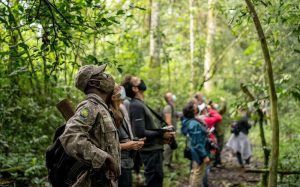
The day begins with a briefing led by experienced guides and rangers. Visitors are divided into small groups and assigned a trekking route based on chimpanzee movements. Researchers track chimpanzees daily, increasing encounter success.
Treks vary in length and difficulty. Some groups locate chimpanzees within an hour. Others follow vocalizations deeper into the forest. Walking conditions remain manageable, though humidity and uneven ground require moderate fitness.
When chimpanzees appear, the forest feels electric. You may witness feeding, play, territorial displays, or vocal communication. Encounters last up to one hour, allowing observation without disturbing natural behavior.
Chimpanzee tracking in Kibale combines excitement with education. It reveals intelligence, emotion, and social complexity in a powerful setting.
Chimpanzee Habituation Experience: A Deeper Immersion
The chimpanzee habituation experience offers a more intensive alternative to standard trekking. Instead of a brief encounter, visitors spend up to four hours with a semi-habituated chimpanzee community.
This experience suits travelers seeking deeper understanding rather than a quick sighting. You accompany researchers as they observe feeding patterns, social interactions, and movement.
The habituation process plays a critical role in conservation and scientific study. Visitor participation helps fund research while promoting responsible wildlife engagement.
The experience requires patience, longer walking distances, and genuine interest in primate behavior. It rewards those willing to slow down and observe.
Best Time to Visit Kibale Forest National Park
The best time to visit Kibale Forest depends on personal priorities, but the park remains accessible year-round.
- Dry Seasons: Dry periods typically run from December to February and June to September. Trails are easier to navigate, and trekking conditions improve. Chimpanzee sightings remain consistent due to their stable territories.
- Wet Seasons: March to May and October to November bring heavier rainfall. The forest becomes lush and vibrant, and birdlife peaks. Trails may be muddy, but chimpanzee encounters remain strong.
Travelers seeking fewer crowds often prefer the wetter months. Those prioritizing ease of walking favor dry periods.
Bigodi Wetland Sanctuary and Community Experiences
Bigodi Wetland Sanctuary lies just outside Kibale Forest National Park and offers a valuable extension to primate-focused itineraries. This community-managed area protects wetlands, grasslands, and forest edges.
Guided walks reveal diverse birdlife, monkeys, and wetland plants. The experience is relaxed and educational, suitable for all fitness levels.
Community involvement stands at the heart of Bigodi’s success. Tourism revenue supports local education, healthcare, and conservation awareness. Visitors gain insight into how communities coexist with protected forests.
Bigodi complements Kibale’s primate experiences by adding cultural depth and conservation context.
Conservation and Sustainability in Kibale
Kibale Forest National Park plays a central role in primate conservation. Long-term research programs monitor chimpanzee health, behavior, and habitat use.
Tourism supports ranger patrols, veterinary interventions, and habitat protection. Revenue-sharing initiatives ensure surrounding communities benefit directly from conservation success.
Education programs promote sustainable land use and reduce pressure on forest resources. This balanced approach strengthens long-term protection for primates and people alike.
Responsible trekking behavior, guided access, and strict regulations help preserve Kibale’s fragile ecosystems.
Accommodation Options Around Kibale
Kibale offers accommodation across a wide comfort range to suit different travelers.
- Luxury lodges provide spacious rooms, forest views, and personalized service.
- Mid-range lodges balance comfort and value, offering convenient access and warm hospitality.
- Budget accommodations focus on simplicity, safety, and proximity to trekking areas.
Choosing accommodation near the park reduces travel time and enhances early morning trekking experiences.
Getting to Kibale Forest National Park
Kibale Forest National Park is accessible by road and air.
Road travel from Entebbe or Kampala takes several hours, passing through tea plantations and rural landscapes. The journey adds cultural perspective to the safari.
Domestic flights connect to nearby towns, followed by short road transfers. Flying suits travelers combining Kibale with other western Uganda parks.
Kibale’s location allows easy integration with savanna and mountain destinations, creating diverse safari itineraries.
Practical Travel Tips for Kibale
Packing essentials include sturdy walking shoes, lightweight long sleeves, rain protection, and insect repellent. Neutral clothing works best in forest environments.
Moderate fitness is recommended. Treks involve walking on uneven ground in humid conditions.
Permits should be secured in advance, especially during peak seasons. Planning ensures smooth scheduling and avoids disappointment.
Responsible trekking etiquette includes maintaining distance, limiting noise, and following guide instructions at all times.
Why Kibale Forest National Park Is a Must-Visit
Kibale Forest National Park offers something rare in modern travel. It delivers close, ethical wildlife encounters grounded in science and conservation. The chimpanzee experiences feel genuine, unscripted, and deeply human.
The forest teaches patience and awareness. It rewards curiosity and respect. Each encounter reveals intelligence, emotion, and social bonds that challenge how we see ourselves.
For travelers planning Uganda chimpanzee trekking, Kibale stands unmatched. It is an essential destination for anyone seeking meaningful primate encounters within a well-protected ecosystem.
Kibale Forest National Park is not just a highlight of Uganda. It is a benchmark for responsible wildlife tourism in Africa, offering experiences that educate, inspire, and endure long after the forest fades from view.
Photo Gallery
What Our Guests Say
Share Your Experience
An Absolute Highlight of Uganda – A Primate Lover’s Dream! My visit to Kibale Forest National Park was nothing short of magical. From the moment we entered the dense, green canopy, I felt like I had stepped into another world. The star attraction, of course, is the chimpanzee tracking – and it exceeded all expectations. Watching a family of wild chimpanzees feed, play, and interact in their natural habitat was a profoundly moving experience I will never forget. But Kibale offers so much more! Our guide was incredibly knowledgeable, pointing out rare birds, colourful butterflies, and several other primate species like the cheeky red colobus and the graceful L\'Hoest\'s monkey. The atmosphere in the rainforest is immersive, with an orchestra of birdcalls and the mysterious rustle of the trees. The park is beautifully maintained, with clear trails and a strong emphasis on conservation and respectful tourism. Everything was well-organized, from the briefing to the actual trek. If you are planning a trip to Uganda, Kibale Forest National Park is an absolute must. It’s a pristine, unforgettable wilderness adventure. Thank you for an incredible day!
Photo Gallery
Plan Your Visit
Need Assistance?
Our gorilla trekking specialists are ready to help you plan your perfect Bwindi adventure.