
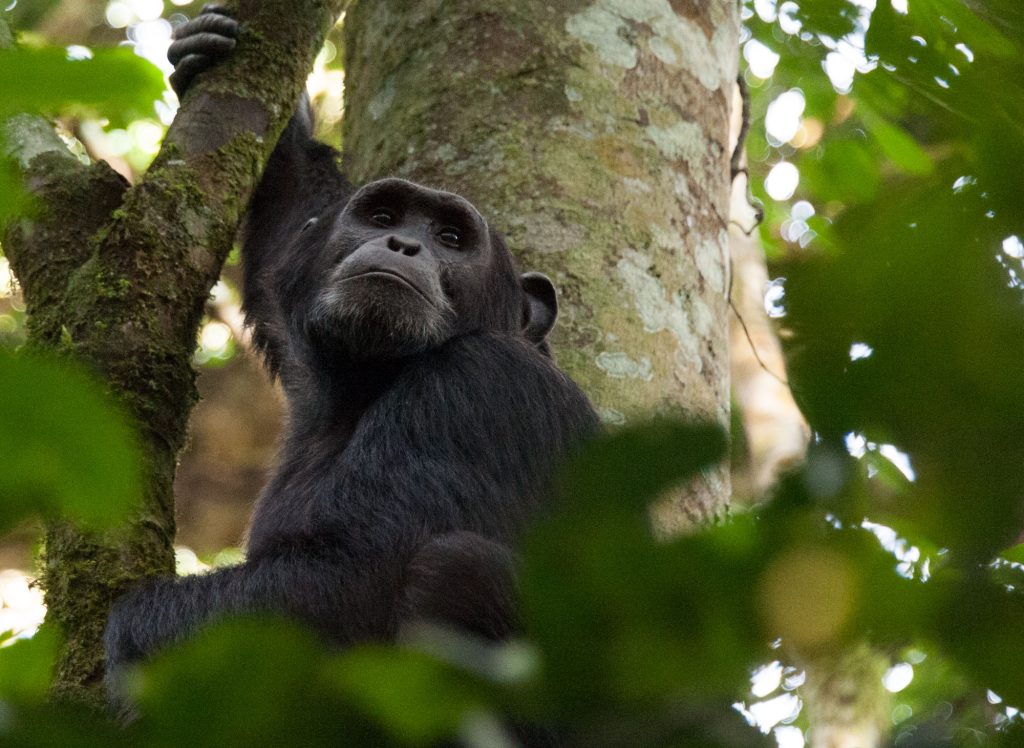
Chimpanzee Trekking Tours in Uganda: A Kibale Guide
Chimpanzee trekking in Uganda takes you into the rainforest with a trained park guide to find a wild chimpanzee community. Kibale National Park is the country’s best-known place for the experience. Once trackers locate the chimpanzees, a standard trek allows up to one hour with them. The walk can take a few hours, because chimpanzees move freely through the forest.
At Ripple Safaris, we help travellers plan the whole experience: the permit, the drive to Kibale, the right place to stay and, if you wish, a visit to Bigodi Wetland or another Ugandan park. This guide explains what to expect, how much to budget and how to choose a chimpanzee trekking tour in Uganda.
Chimpanzee trekking in Uganda at a glance
- Best-known trekking location: Kibale National Park in western Uganda.
- Time with chimpanzees: Up to one hour on a standard trek, once the group is found.
- Time on the forest trail: Often around one to four hours, but it depends on where the chimpanzees move.
- Longer option: The Chimpanzee Habituation Experience (CHEX), which lets visitors spend longer following a community with researchers and guides.
- Best approach: Book your permit and transport together, allow time to reach Kibale, and follow your ranger’s instructions in the forest.
Why go chimpanzee trekking in Kibale?
Kibale protects tropical rainforest, woodland and wetland habitat in western Uganda. Its best-known residents are chimpanzees, but the forest is also home to other primates, birds and many smaller creatures. Even when the chimpanzees stay high in the canopy or move quickly, the forest walk gives you a close look at a rich ecosystem.
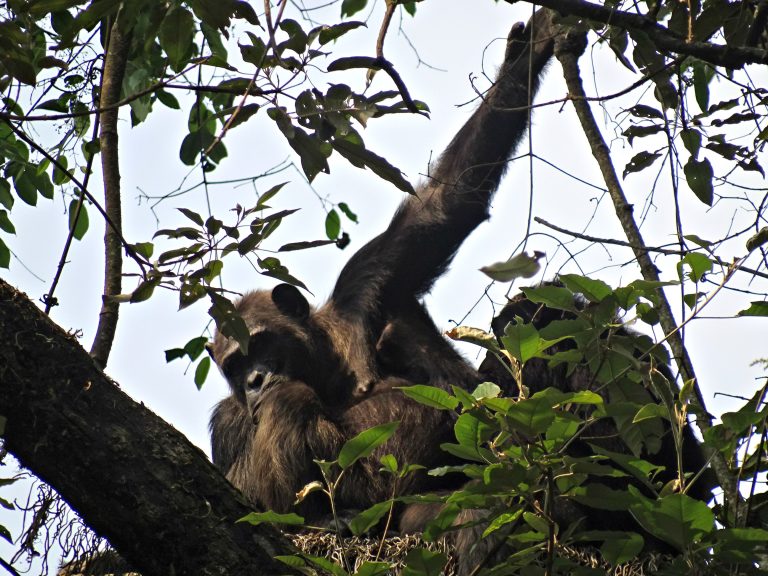
The trek begins at Kanyanchu, where park staff brief visitors and assign guides. Trackers help locate a chimpanzee community, then your group follows on foot. You may hear calls before you see the animals. When you find them, watch for feeding, grooming, play, movement through the canopy and communication within the group. Every encounter is different; no one can promise a particular behaviour or a perfect photograph.
Kibale also works well as part of a wider Uganda safari. You can pair the forest with a community-led walk at Bigodi Wetland Sanctuary, or continue to Queen Elizabeth National Park for game drives and a boat trip on the Kazinga Channel.
Standard chimpanzee trekking or habituation experience?
Choose the standard trek if you want a guided forest walk and an opportunity to observe chimpanzees without committing to a full day in the forest. After the rangers find the group, visitors may spend up to one hour with it.
Choose the Chimpanzee Habituation Experience if you want to spend longer with a community that is becoming accustomed to human observers. You join the team in the forest for more of the day and may observe a broader stretch of the chimpanzees’ daily routine. It takes more time and stamina than a standard trek. Ask us which permits and dates are available before you build your itinerary around CHEX.
Both experiences take place in a natural forest setting. Neither is a zoo visit: chimpanzees choose where to go, and your guide decides how close the group may safely stand.
Chimpanzee trekking permits and cost in Uganda
The permit is a key part of your budget, but it is not the full cost of a safari. You also need to consider transport, accommodation, meals, park activities and any additional nights on the road.
At the time of writing (October 2026), the 2026 Uganda Wildlife Authority tariff information lists a standard Kibale chimpanzee-tracking permit for foreign non-residents at US$300 per person. A reduced US$200 rate has been advertised for selected low-season months (April, May and November), subject to the authority’s current terms and permit availability. Habituation permits and rates differ by permit type and traveller category, so ask for the exact price before paying.
Rates and booking rules can change. Confirm the current tariff, your permit date and any age or health requirements before you pay. Permits are date-specific, and low-season discounts may come with restrictions. A tour operator can help coordinate the permit with your arrival time, accommodation and onward travel.
When is the best time to go?
You can track chimpanzees throughout the year. Many travellers prefer the drier periods, generally June to September and December to February, when forest paths are often easier to walk. Weather still varies, and rain can fall in any month.
The wetter months can bring muddier, more slippery trails, so sturdy footwear matters. They may also suit visitors who value quieter travel or are flexible about conditions. If a lower seasonal permit rate is available for your dates, weigh that saving against the weather and any restrictions attached to the offer. Chimpanzee movement—not the calendar—determines how long it takes to find the group.
What happens on a chimpanzee trek?
- Arrive at the briefing point. Your booking confirmation will give you the reporting time and place, usually Kanyanchu for Kibale tracking.
- Meet your guide. Park staff explain the forest rules, check permits and organise visitors into groups.
- Walk with the ranger. The group follows approved trails while the guide and trackers listen for calls and look for signs of chimpanzee activity.
- Observe respectfully. If the group is found, follow the ranger’s instructions about distance, noise, movement and photography. The standard viewing period is up to one hour.
- Return from the forest. The total walk varies with the chimpanzees’ location, so leave a generous margin before any onward drive or flight.
What should you pack?
- Sturdy, closed-toe walking shoes or boots with good grip.
- Long trousers and a long-sleeved shirt to protect against vegetation and insects.
- A light rain jacket, even in a drier month.
- Drinking water and a small daypack.
- Insect repellent and sunscreen.
- A camera or phone, with flash switched off when photographing wildlife.
- Walking poles if you normally use them or would feel steadier with support.
Pack light enough to walk comfortably. Tell us before travel if you have mobility, health or fitness concerns so we can discuss the route and realistic options with you.
How to plan a chimpanzee trekking tour in Uganda
Do not treat Kibale as a quick detour from Kampala or Entebbe. The drive is long, and the trek has a fixed reporting time. Most visitors spend at least two nights near the forest: one night before the trek and one after, especially if they are continuing to another park. Your actual journey time depends on the route, traffic, road conditions and stops.
A three-day plan gives you time to reach the area, track chimpanzees and enjoy a second forest or community activity before returning. See our 3-day Kibale chimpanzee trekking tour for a sample itinerary.
With more time, add Queen Elizabeth National Park for savannah wildlife and the Kazinga Channel. Our 4-day Kibale and Queen Elizabeth safari combines chimpanzee tracking with a different side of Uganda’s wildlife.
For a route built around your dates, pace and accommodation preferences, contact Ripple Safaris. We can help match the permit to the itinerary and explain what is included in your quote.
Responsible chimpanzee trekking
Chimpanzees are wild animals, and a respectful visit puts their welfare first. Keep quiet, stay with your group, follow the distance set by your ranger and never try to touch, feed, call or surround an animal. Do not use flash. Follow the guide’s health instructions; if you feel unwell, tell the team before entering the forest, because people can pass illnesses to great apes.
These simple choices protect you, the chimpanzees and the quality of the encounter for everyone who follows.
Frequently asked questions
Where can I go chimpanzee trekking in Uganda?
Kibale National Park is Uganda’s best-known destination for chimpanzee trekking. The Kibale experience starts at Kanyanchu. Other forests also offer primate experiences, but the right location depends on your route, permit availability and the type of trek you want.
How long does chimpanzee trekking take?
Allow several hours for the forest walk. The trek may take around one to four hours to find the chimpanzees, but the time varies with their movements. Once the group is found, a standard permit allows up to one hour of viewing.
Are chimpanzees guaranteed on a trek?
No. Guides and trackers work hard to locate the community, but chimpanzees are wild and free to move through dense forest. Sightings and viewing conditions can never be guaranteed.
How much does a Kibale chimpanzee permit cost?
At the time of writing, the 2026 standard permit for a foreign non-resident is US$300, with a reduced US$200 rate advertised for selected low-season months. Rates depend on traveller category, permit type, date and current authority rules; confirm the price before booking.
What is the difference between chimpanzee trekking and habituation?
A standard trek gives you a guided walk and up to one hour with a located chimpanzee group. The habituation experience lasts longer and lets you follow a community with guides and researchers as it becomes accustomed to human observers.
Can I combine chimpanzee trekking with a Uganda wildlife safari?
Yes. Many travellers combine Kibale with Queen Elizabeth National Park, where they can add game drives and a boat trip on the Kazinga Channel. Allow enough days for the drive between destinations instead of trying to fit everything into a rushed schedule.

Join the conversation
2 responses
I’m excited already. This post is well detailed. Thank you for sharing and I can’t wait to visit the great Apes
We are Glad that our services are of great help to you in your decision making for your Next safari. Thank you Nelly. We will be happy to take you on your Safari