Uganda
Mgahinga Gorilla National Park
Visit Mgahinga Gorilla National Park in Uganda for mountain gorilla and golden monkey tracking beneath the Virunga volcanoes.
Plan a visit- Best time to travel
- June–September and December–February
- Size
- 34 km²
- Established
- 1991
Mgahinga Gorilla National Park protects a small but important part of Uganda’s Virunga Mountains in the far southwest. Its forests and volcanic slopes support mountain gorillas and endangered golden monkeys, while the highland setting offers a striking contrast to Uganda’s savannah parks. Mgahinga also forms part of a wider transboundary conservation landscape shared with Rwanda and the Democratic Republic of the Congo.
Gorilla and golden monkey tracking
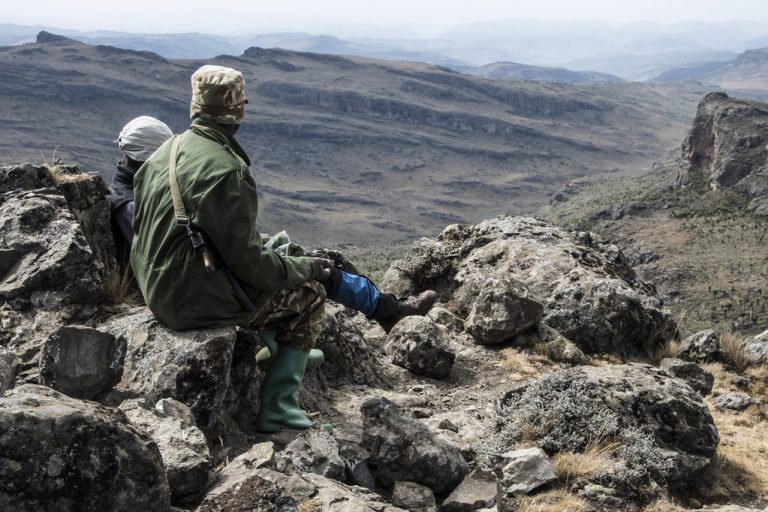
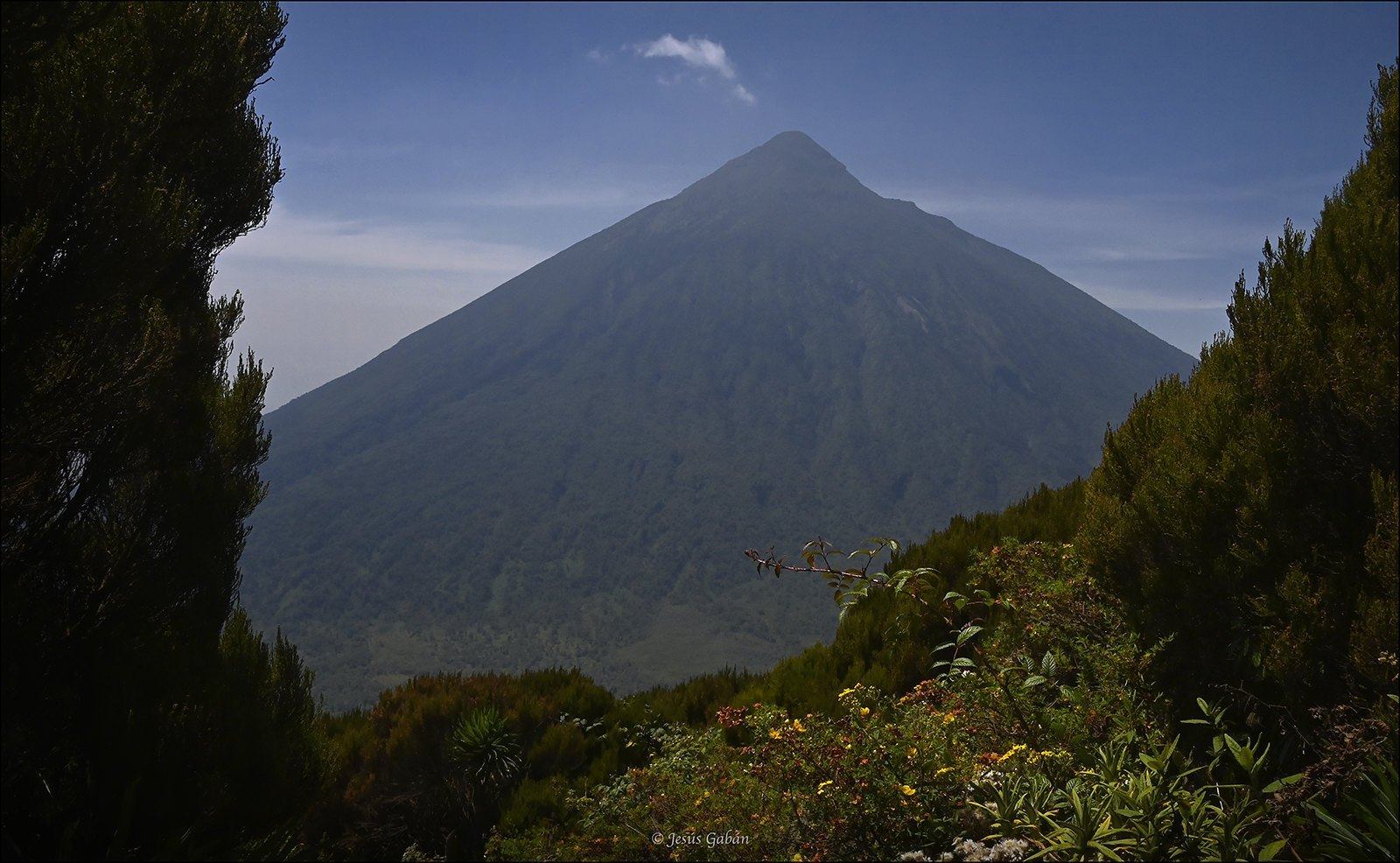
Guided gorilla trekking and golden monkey tracking are the park’s signature primate experiences. Permits, availability and visitor requirements differ by activity, so confirm details before booking. The volcanic skyline is formed by Muhabura, Gahinga and Sabinyo; guided hikes offer a way to explore the mountain environment when routes and weather permit.
Mgahinga is part of the wider Virunga conservation landscape, where protected areas continue across national borders. The forest habitat and movement of wildlife make cooperation between neighboring parks important for the long-term protection of mountain gorillas and other species.
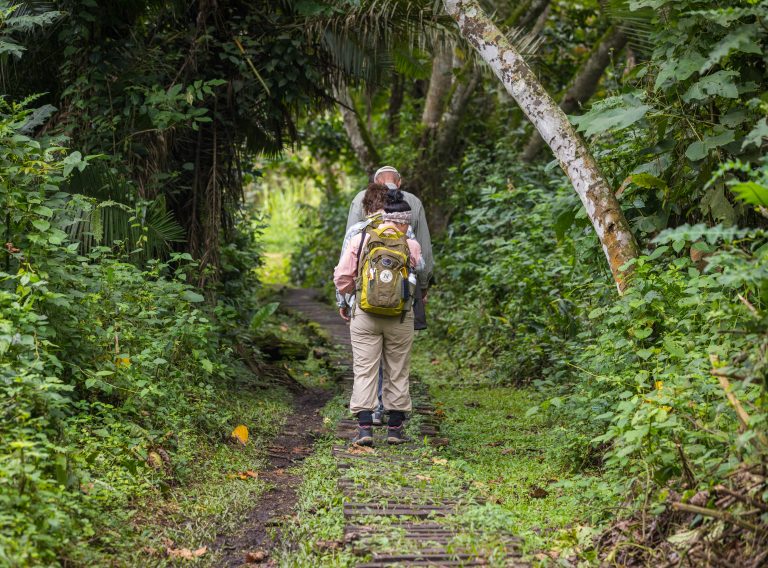
Tracking is guided and follows park rules designed to protect primates and visitors. Mountain paths can be steep and conditions change quickly, so allow time for briefings, wear layers and be prepared for a walk that may last longer than expected.
Batwa heritage and responsible travel
Community-led cultural experiences provide insight into Batwa history and forest knowledge. Choose experiences led by Batwa community members and follow their guidance about what is appropriate to share. Kisoro is the main nearby town; plan transfers and overnight stays around your permit time and the park’s highland roads.
Because the park sits at high elevation, temperatures can feel cool even in a tropical climate. Bring waterproof layers, sturdy footwear and water, and ask about the current conditions for any planned volcano hike before committing to a route.
Stay near Kisoro or arrange a suitable transfer so you can reach the park at the required time. Permit availability, start times and activity rules can change; confirm them with Uganda Wildlife Authority or your operator before finalizing other travel.
Source: Uganda Wildlife Authority.
What to expect
Wildlife
- Mammal species
- 76+
- Bird species
- 180+
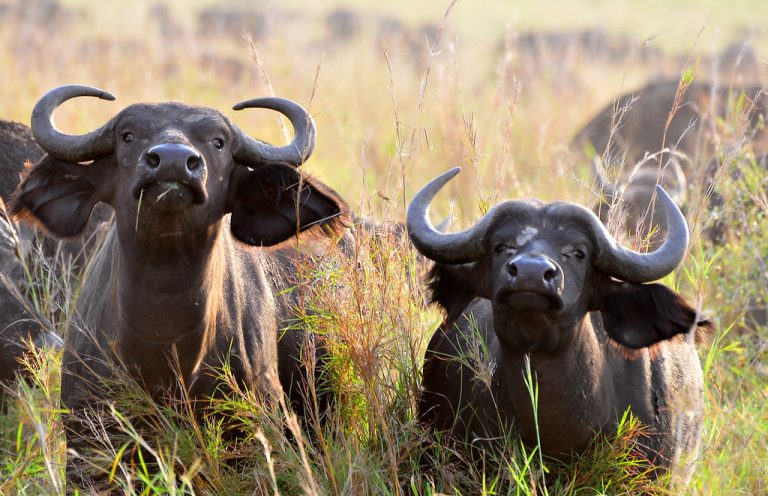
The Virunga slopes are home to mountain gorillas and golden monkeys, with forest buffaloes and many highland bird species.
Plants & vegetation
A verified park-wide plant species total is not published
Montane forest gives way to bamboo, heath and afro-alpine vegetation as the volcanic slopes rise.
Published species totals vary by survey date and coverage. Mammal and bird counts are shown separately; they are not a complete count of every wildlife group.
Main attractions & activities
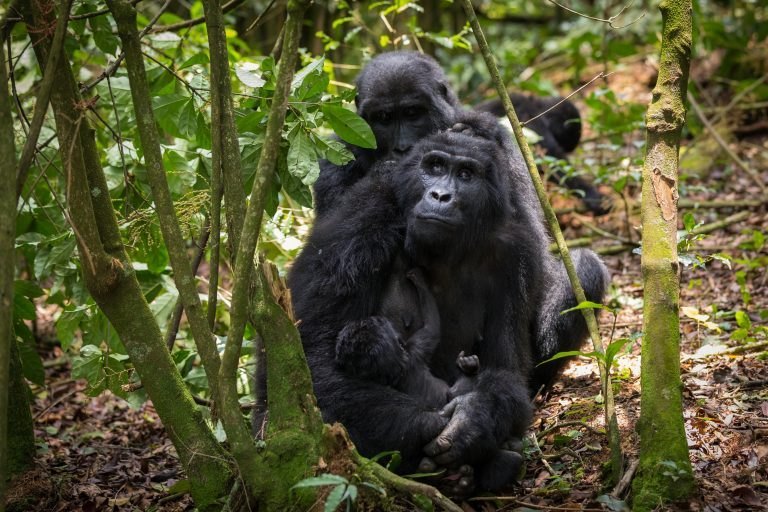
Mountain gorillas
Experience Guided gorilla tracking
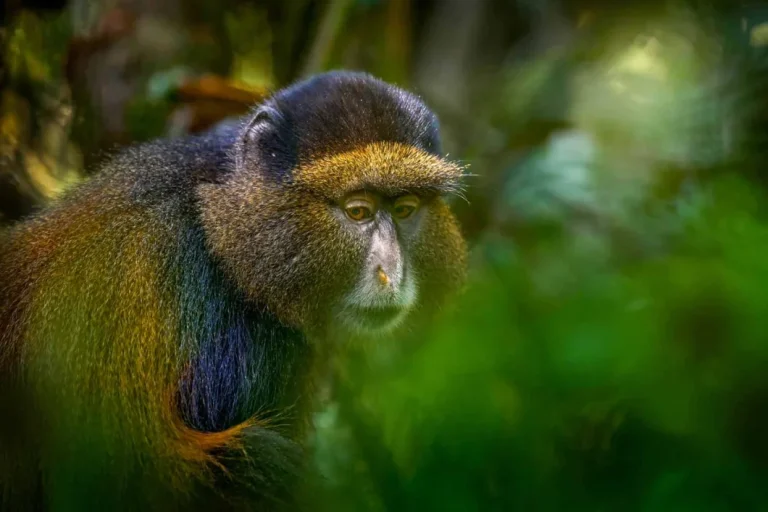
Golden monkeys
Experience Golden monkey tracking
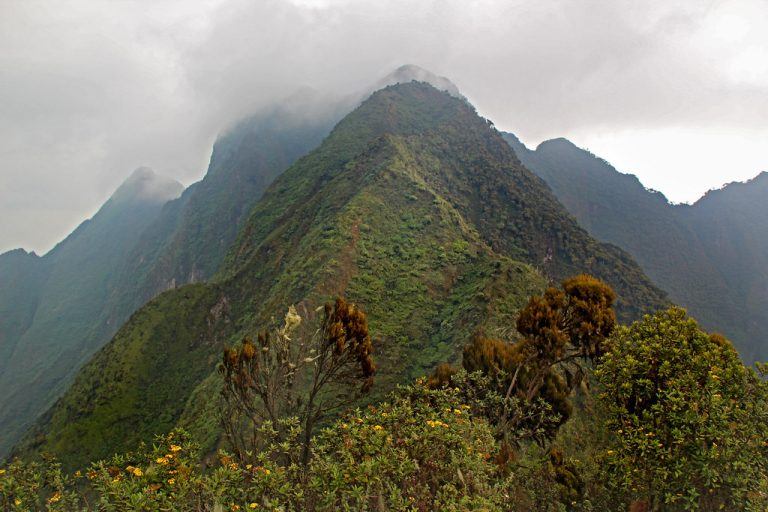
Virunga volcanoes
Experience Guided volcano hike or Batwa-led forest experience
Activities & fees
| Activity | Permit or activity fee |
|---|---|
| Mountain gorilla tracking | US$800 permit (foreign non-resident) |
| Golden monkey tracking | US$60 UWA permit (foreign non-resident) |
| Guided Virunga volcano hikes | US$100 UWA climbing fee (foreign non-resident) |
| Batwa-led forest experiences | Price on request |
These are published authority permit or activity fees for foreign non-resident adults where a rate is available, not complete safari-package prices. Rates can vary by visitor category and travel date; park entry, transport, guides, and operator services may be charged separately. Confirm current rates before booking with the Uganda Wildlife Authority or Rwanda Development Board.
Frequently Asked Questions
01 Can I see gorillas and golden monkeys in Mgahinga?
Both mountain gorillas and golden monkeys live in the park, and guided tracking experiences are offered. They require separate planning; verify permit availability and rules with Uganda Wildlife Authority. At Mgahinga Gorilla National Park, this question is best understood in the context of high volcanic slopes and montane forest in Uganda’s Virunga landscape. The information already provided identifies the main point, while the exact experience can vary with location, season, weather, access and wildlife movement. This distinction matters when a visitor is deciding what to expect from a walk, drive or wildlife encounter. Use general descriptions to guide your choices, not as a promise of a specific sighting, route or activity outcome. Before you set out, ask a local guide what conditions are like and which details are confirmed for that day. Allow time for a briefing, the activity and return journey.
The park offers both gorilla and golden monkey tracking, with permits and arrangements that should be confirmed separately. For a visitor asking “Can I see gorillas and golden monkeys in Mgahinga?,” planning at Mgahinga Gorilla National Park starts by matching accommodation, transport and activity times. The local consideration is plan separate primate permits, Kisoro transfers and a suitable pace for highland trails. Confirm the reporting point, expected duration, suitable clothing and equipment, and current permit, age, health or safety requirements with park staff or an authorized operator. Travel may take longer than a map suggests when roads are rough, trails are steep or sites lie in different sectors. Share mobility, fitness or health concerns before booking so recommendations can reflect the route you intend to take. Leave a flexible margin around the experience, since weather, wildlife movement and park operations can change.
Ask Uganda Wildlife Authority or your operator about current availability, reporting times and requirements before building the rest of your itinerary. Responsible travel at Mgahinga Gorilla National Park means treating the landscape as a living habitat rather than a predictable attraction. Visitors should keep in mind mountain gorillas, golden monkeys, the Virunga ecosystem and Batwa-led cultural experiences. Follow ranger instructions, stay on approved trails and roads, give wildlife room, and never feed, call or crowd animals. For any community visit, choose a locally led experience, ask permission before taking photographs and respect guidance about what is appropriate to share. Check schedules, fees, permits and access with the relevant park authority shortly before departure, because details can change. A knowledgeable guide can explain conservation context and adjust plans to conditions, making a visit safer and more respectful.
02 Which volcanoes are in Mgahinga Gorilla National Park?
The park's Virunga peaks are Muhabura, Gahinga and Sabinyo, whose forested slopes shape the landscape and hiking routes. At Mgahinga Gorilla National Park, this question is best understood in the context of high volcanic slopes and montane forest in Uganda’s Virunga landscape. The information already provided identifies the main point, while the exact experience can vary with location, season, weather, access and wildlife movement. This distinction matters when a visitor is deciding what to expect from a walk, drive or wildlife encounter. Use general descriptions to guide your choices, not as a promise of a specific sighting, route or activity outcome. Before you set out, ask a local guide what conditions are like and which details are confirmed for that day. Allow time for a briefing, the activity and return journey.
Muhabura, Gahinga and Sabinyo are the three volcanic peaks associated with the park's Virunga landscape. For a visitor asking “Which volcanoes are in Mgahinga Gorilla National Park?,” planning at Mgahinga Gorilla National Park starts by matching accommodation, transport and activity times. The local consideration is plan separate primate permits, Kisoro transfers and a suitable pace for highland trails. Confirm the reporting point, expected duration, suitable clothing and equipment, and current permit, age, health or safety requirements with park staff or an authorized operator. Travel may take longer than a map suggests when roads are rough, trails are steep or sites lie in different sectors. Share mobility, fitness or health concerns before booking so recommendations can reflect the route you intend to take. Leave a flexible margin around the experience, since weather, wildlife movement and park operations can change.
Hiking routes and conditions differ, so check which trails are operating and select a route appropriate to your fitness and available time. Responsible travel at Mgahinga Gorilla National Park means treating the landscape as a living habitat rather than a predictable attraction. Visitors should keep in mind mountain gorillas, golden monkeys, the Virunga ecosystem and Batwa-led cultural experiences. Follow ranger instructions, stay on approved trails and roads, give wildlife room, and never feed, call or crowd animals. For any community visit, choose a locally led experience, ask permission before taking photographs and respect guidance about what is appropriate to share. Check schedules, fees, permits and access with the relevant park authority shortly before departure, because details can change. A knowledgeable guide can explain conservation context and adjust plans to conditions, making a visit safer and more respectful.
03 What is the Batwa cultural experience?
It is a community-led opportunity to learn about Batwa heritage and forest knowledge. Ask about current availability and participate respectfully. At Mgahinga Gorilla National Park, this question is best understood in the context of high volcanic slopes and montane forest in Uganda’s Virunga landscape. The information already provided identifies the main point, while the exact experience can vary with location, season, weather, access and wildlife movement. This distinction matters when a visitor is deciding what to expect from a walk, drive or wildlife encounter. Use general descriptions to guide your choices, not as a promise of a specific sighting, route or activity outcome. Before you set out, ask a local guide what conditions are like and which details are confirmed for that day. Allow time for a briefing, the activity and return journey.
Batwa-led experiences can share cultural knowledge and perspectives on the forest and its history. For a visitor asking “What is the Batwa cultural experience?,” planning at Mgahinga Gorilla National Park starts by matching accommodation, transport and activity times. The local consideration is plan separate primate permits, Kisoro transfers and a suitable pace for highland trails. Confirm the reporting point, expected duration, suitable clothing and equipment, and current permit, age, health or safety requirements with park staff or an authorized operator. Travel may take longer than a map suggests when roads are rough, trails are steep or sites lie in different sectors. Share mobility, fitness or health concerns before booking so recommendations can reflect the route you intend to take. Leave a flexible margin around the experience, since weather, wildlife movement and park operations can change.
Choose an experience organized with Batwa community members, ask before taking photographs and follow your hosts' guidance. Responsible travel at Mgahinga Gorilla National Park means treating the landscape as a living habitat rather than a predictable attraction. Visitors should keep in mind mountain gorillas, golden monkeys, the Virunga ecosystem and Batwa-led cultural experiences. Follow ranger instructions, stay on approved trails and roads, give wildlife room, and never feed, call or crowd animals. For any community visit, choose a locally led experience, ask permission before taking photographs and respect guidance about what is appropriate to share. Check schedules, fees, permits and access with the relevant park authority shortly before departure, because details can change. A knowledgeable guide can explain conservation context and adjust plans to conditions, making a visit safer and more respectful.
04 Do gorilla and golden monkey tracking need separate permits?
Gorilla trekking and golden monkey tracking are distinct activities with separate arrangements and permit availability. At Mgahinga Gorilla National Park, this question is best understood in the context of high volcanic slopes and montane forest in Uganda’s Virunga landscape. The information already provided identifies the main point, while the exact experience can vary with location, season, weather, access and wildlife movement. This distinction matters when a visitor is deciding what to expect from a walk, drive or wildlife encounter. Use general descriptions to guide your choices, not as a promise of a specific sighting, route or activity outcome. Before you set out, ask a local guide what conditions are like and which details are confirmed for that day. Allow time for a briefing, the activity and return journey.
If you want to do both, confirm each activity and its reporting time before choosing your accommodation and transfer plan. For a visitor asking “Do gorilla and golden monkey tracking need separate permits?,” planning at Mgahinga Gorilla National Park starts by matching accommodation, transport and activity times. The local consideration is plan separate primate permits, Kisoro transfers and a suitable pace for highland trails. Confirm the reporting point, expected duration, suitable clothing and equipment, and current permit, age, health or safety requirements with park staff or an authorized operator. Travel may take longer than a map suggests when roads are rough, trails are steep or sites lie in different sectors. Share mobility, fitness or health concerns before booking so recommendations can reflect the route you intend to take. Leave a flexible margin around the experience, since weather, wildlife movement and park operations can change.
Permit rules and fees can change, so verify details directly with Uganda Wildlife Authority or an authorized operator. Responsible travel at Mgahinga Gorilla National Park means treating the landscape as a living habitat rather than a predictable attraction. Visitors should keep in mind mountain gorillas, golden monkeys, the Virunga ecosystem and Batwa-led cultural experiences. Follow ranger instructions, stay on approved trails and roads, give wildlife room, and never feed, call or crowd animals. For any community visit, choose a locally led experience, ask permission before taking photographs and respect guidance about what is appropriate to share. Check schedules, fees, permits and access with the relevant park authority shortly before departure, because details can change. A knowledgeable guide can explain conservation context and adjust plans to conditions, making a visit safer and more respectful.
05 Can I hike the Virunga volcanoes from Mgahinga?
Guided hiking experiences are available in the Virunga landscape, including routes associated with the park's volcanic peaks. At Mgahinga Gorilla National Park, this question is best understood in the context of high volcanic slopes and montane forest in Uganda’s Virunga landscape. The information already provided identifies the main point, while the exact experience can vary with location, season, weather, access and wildlife movement. This distinction matters when a visitor is deciding what to expect from a walk, drive or wildlife encounter. Use general descriptions to guide your choices, not as a promise of a specific sighting, route or activity outcome. Before you set out, ask a local guide what conditions are like and which details are confirmed for that day. Allow time for a briefing, the activity and return journey.
Difficulty and duration depend on the selected route, altitude, weather and trail conditions. For a visitor asking “Can I hike the Virunga volcanoes from Mgahinga?,” planning at Mgahinga Gorilla National Park starts by matching accommodation, transport and activity times. The local consideration is plan separate primate permits, Kisoro transfers and a suitable pace for highland trails. Confirm the reporting point, expected duration, suitable clothing and equipment, and current permit, age, health or safety requirements with park staff or an authorized operator. Travel may take longer than a map suggests when roads are rough, trails are steep or sites lie in different sectors. Share mobility, fitness or health concerns before booking so recommendations can reflect the route you intend to take. Leave a flexible margin around the experience, since weather, wildlife movement and park operations can change.
Check which routes are open and choose a hike that matches your fitness and available time; follow your guide throughout. Responsible travel at Mgahinga Gorilla National Park means treating the landscape as a living habitat rather than a predictable attraction. Visitors should keep in mind mountain gorillas, golden monkeys, the Virunga ecosystem and Batwa-led cultural experiences. Follow ranger instructions, stay on approved trails and roads, give wildlife room, and never feed, call or crowd animals. For any community visit, choose a locally led experience, ask permission before taking photographs and respect guidance about what is appropriate to share. Check schedules, fees, permits and access with the relevant park authority shortly before departure, because details can change. A knowledgeable guide can explain conservation context and adjust plans to conditions, making a visit safer and more respectful.