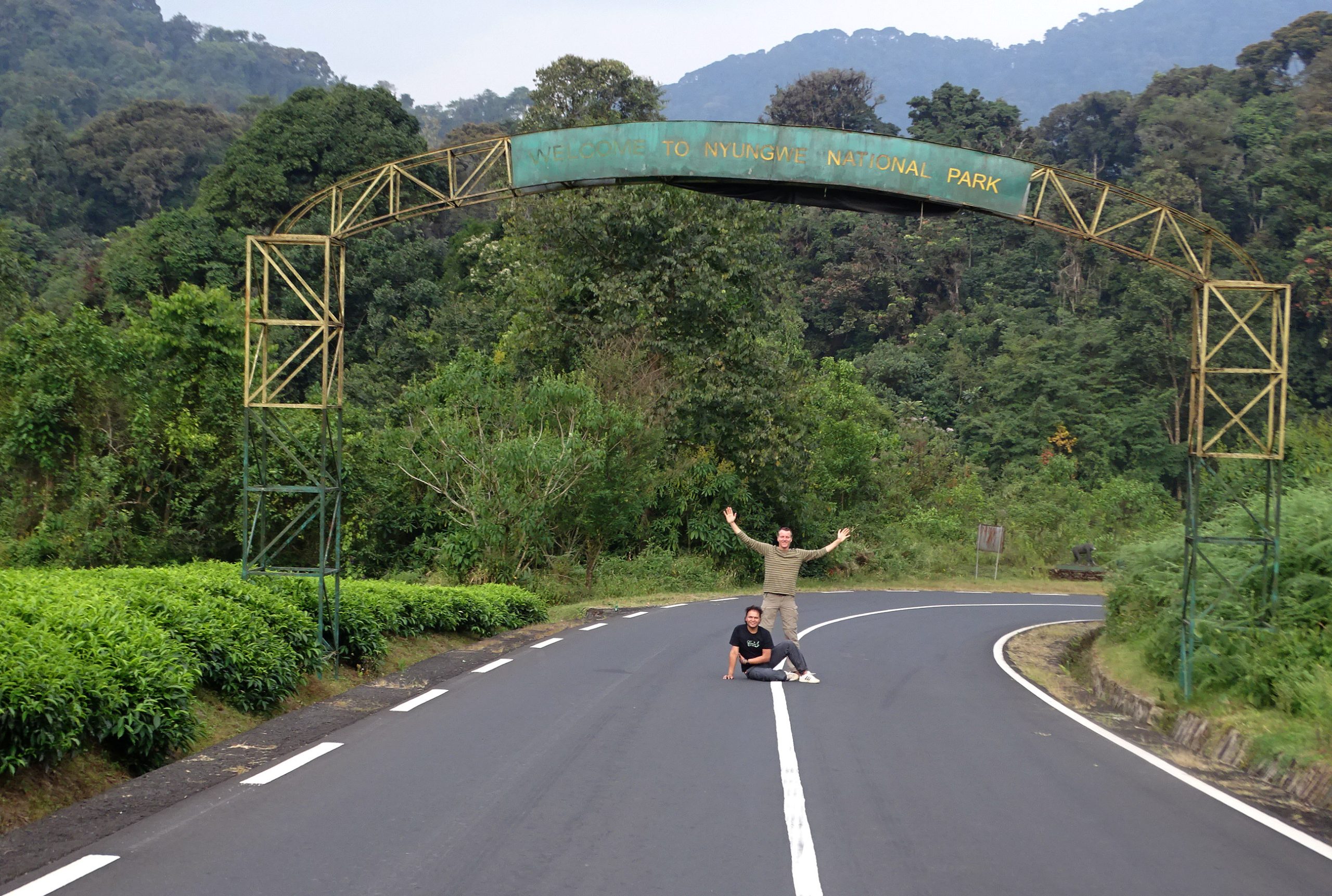
Rwanda
Nyungwe Forest National Park
Discover Nyungwe Forest National Park in Rwanda for chimpanzee tracking, a rainforest canopy walk, rare primates and exceptional birding.
Plan a visit- Best time to travel
- June–September and December–February
- Size
- 1,019 km²
- Established
- 2004
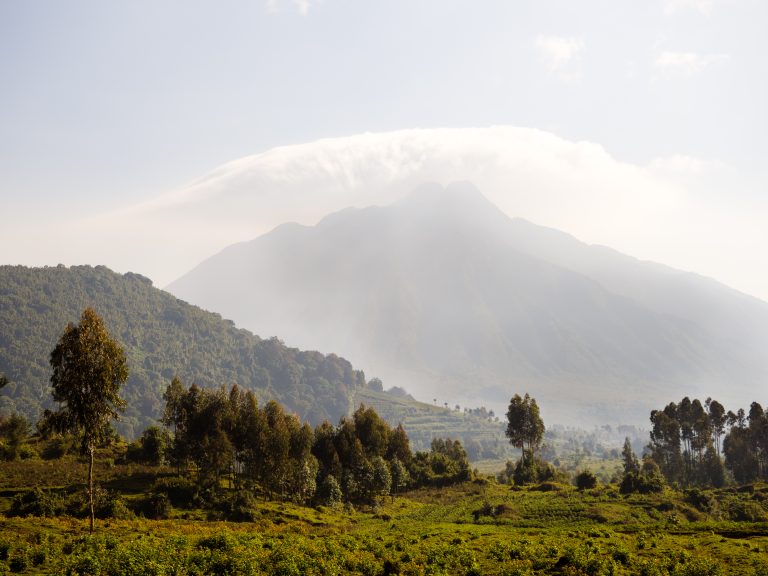
Nyungwe Forest National Park in southwestern Rwanda protects one of Africa’s oldest rainforests and the country’s largest tract of forest. Its Afromontane landscape includes steep slopes, bamboo, wetlands and grassland, and its watershed feeds both the Congo and Nile river systems. Nyungwe is a major destination for primate tracking, rainforest hikes and birdwatching.
Chimpanzee tracking and the canopy walkway
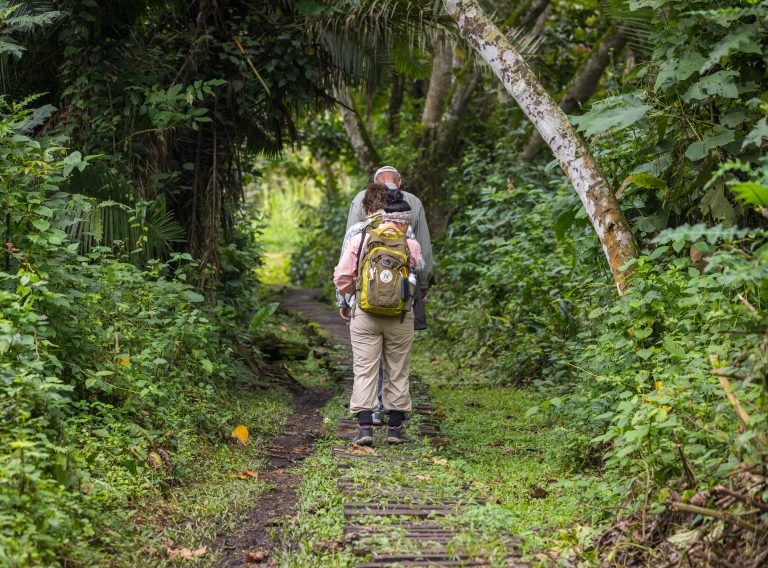
Guided chimpanzee tracking begins early and follows trackers into dense forest; the hike can be challenging, and sightings are never guaranteed. Nyungwe is home to 13 primate species, including chimpanzees, L’Hoest’s monkeys and colobus monkeys. The suspended canopy walkway offers a view through the forest from above, while guided trails and birding provide slower ways to explore.
Chimpanzee tracking is active and unpredictable: groups move through thick vegetation, and trackers may need to cover uneven ground to locate them. Start times, permitted group sizes and age rules are set by park management, so check the latest requirements rather than relying on old travel advice.
Colobus monkeys and other primates provide additional reasons to explore Nyungwe. Visitors interested in birds can arrange a dedicated guided walk, while the canopy walkway offers a shorter experience above the forest floor when open and operating.
Planning a Nyungwe visit
Stay close enough to the park to reach early activities and allow time for more than one experience. Wear sturdy shoes and pack rain protection, as forest weather can change quickly. Confirm activity schedules, age requirements and access with park management before booking; Nyungwe pairs well with Rwanda’s savannah and volcano destinations.
Allow at least enough time for an early forest activity and a second experience on another day; more nights make the long journey to southwestern Rwanda more worthwhile. Nearby tea-growing landscapes and the Lake Kivu region can be incorporated into a broader route.
Nyungwe is cool and often wet, so pack layers and footwear with good grip. Confirm activity schedules, meeting locations and transport time with park management or your operator, especially if you are connecting to another destination the same day.
Source: African Parks, in partnership with the Rwanda Development Board.
What to expect
Wildlife
- Mammal species
- 85
- Bird species
- 345
Chimpanzees, colobus monkeys and other primates share this forest with a diverse community of Albertine Rift birds.
Plants & vegetation
1,100+ recorded plant species
A high-altitude rainforest with a dense canopy, orchids, ferns, mosses and rich montane plant life.
Published species totals vary by survey date and coverage. Mammal and bird counts are shown separately; they are not a complete count of every wildlife group.
Main attractions & activities
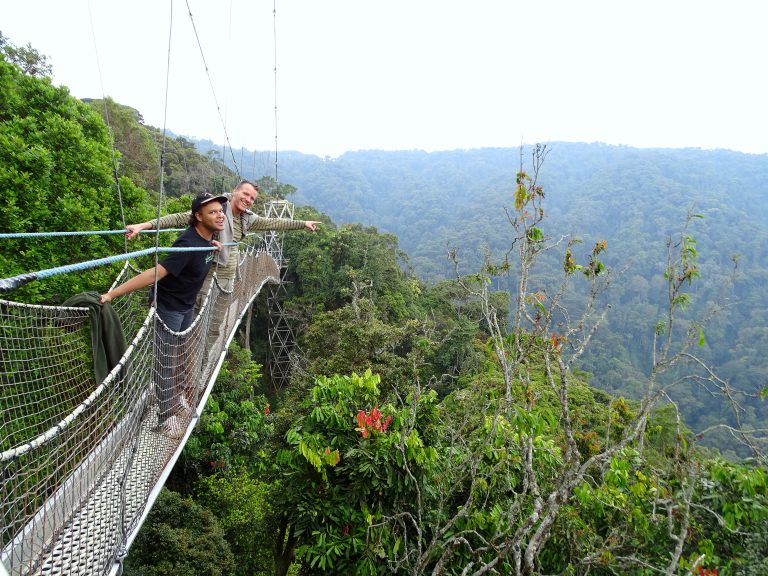
Nyungwe canopy walkway
Experience Guided canopy walk
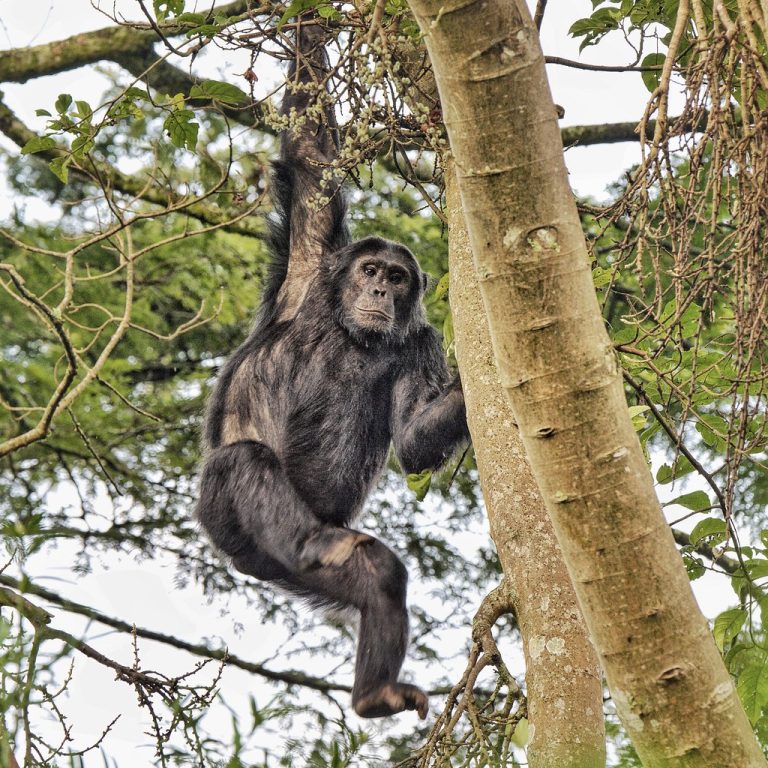
Chimpanzee communities
Experience Guided chimpanzee tracking
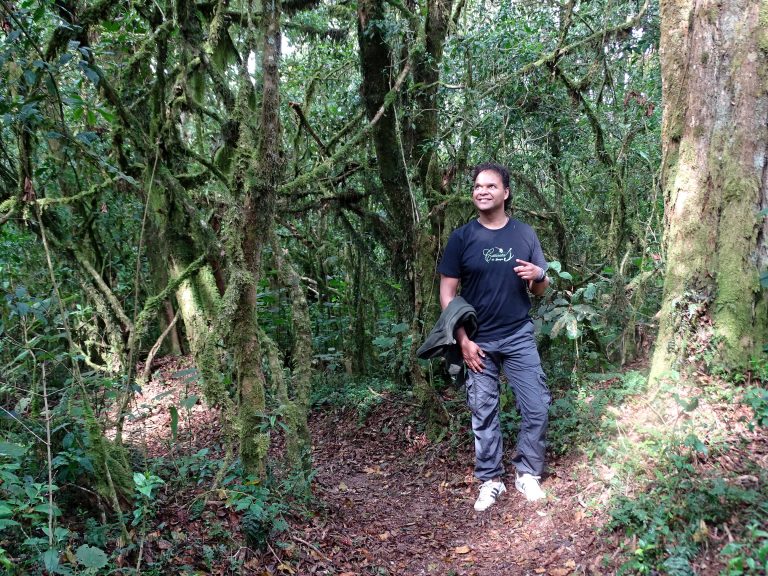
Forest trails
Experience Colobus tracking, hiking and birdwatching
Activities & fees
| Activity | Permit or activity fee |
|---|---|
| Chimpanzee tracking | Price on request |
| Canopy walkway | Price on request |
| Colobus monkey tracking | Price on request |
| Guided rainforest birding | Price on request |
These are published authority permit or activity fees for foreign non-resident adults where a rate is available, not complete safari-package prices. Rates can vary by visitor category and travel date; park entry, transport, guides, and operator services may be charged separately. Confirm current rates before booking with the Uganda Wildlife Authority or Rwanda Development Board.
Frequently Asked Questions
01 What is Nyungwe Forest National Park famous for?
Nyungwe is known for its ancient rainforest, 13 primate species, chimpanzee tracking, birdlife, hiking trails and suspended canopy walkway. At Nyungwe Forest National Park, this question is best understood in the context of a large Afromontane rainforest in southwestern Rwanda and an important watershed. The information already provided identifies the main point, while the exact experience can vary with location, season, weather, access and wildlife movement. This distinction matters when a visitor is deciding what to expect from a walk, drive or wildlife encounter. Use general descriptions to guide your choices, not as a promise of a specific sighting, route or activity outcome. Before you set out, ask a local guide what conditions are like and which details are confirmed for that day. Allow time for a briefing, the activity and return journey.
Nyungwe is known for rainforest, chimpanzee tracking, a suspended canopy walkway and a broad range of primates and birds. For a visitor asking “What is Nyungwe Forest National Park famous for?,” planning at Nyungwe Forest National Park starts by matching accommodation, transport and activity times. The local consideration is plan early forest activities, wet trails, accommodation and the longer regional road journey. Confirm the reporting point, expected duration, suitable clothing and equipment, and current permit, age, health or safety requirements with park staff or an authorized operator. Travel may take longer than a map suggests when roads are rough, trails are steep or sites lie in different sectors. Share mobility, fitness or health concerns before booking so recommendations can reflect the route you intend to take. Leave a flexible margin around the experience, since weather, wildlife movement and park operations can change.
It is also an important watershed, with forested highlands feeding both the Congo and Nile river systems. Responsible travel at Nyungwe Forest National Park means treating the landscape as a living habitat rather than a predictable attraction. Visitors should keep in mind chimpanzees, thirteen primate species, birdlife and the conservation value of the forest. Follow ranger instructions, stay on approved trails and roads, give wildlife room, and never feed, call or crowd animals. For any community visit, choose a locally led experience, ask permission before taking photographs and respect guidance about what is appropriate to share. Check schedules, fees, permits and access with the relevant park authority shortly before departure, because details can change. A knowledgeable guide can explain conservation context and adjust plans to conditions, making a visit safer and more respectful.
02 Can you see chimpanzees in Nyungwe?
Guided chimpanzee tracking is offered, but chimpanzees are wild and move through dense forest, so sightings cannot be guaranteed. At Nyungwe Forest National Park, this question is best understood in the context of a large Afromontane rainforest in southwestern Rwanda and an important watershed. The information already provided identifies the main point, while the exact experience can vary with location, season, weather, access and wildlife movement. This distinction matters when a visitor is deciding what to expect from a walk, drive or wildlife encounter. Use general descriptions to guide your choices, not as a promise of a specific sighting, route or activity outcome. Before you set out, ask a local guide what conditions are like and which details are confirmed for that day. Allow time for a briefing, the activity and return journey.
Guided trackers set out to locate wild chimpanzees in dense forest, but sightings can never be guaranteed. For a visitor asking “Can you see chimpanzees in Nyungwe?,” planning at Nyungwe Forest National Park starts by matching accommodation, transport and activity times. The local consideration is plan early forest activities, wet trails, accommodation and the longer regional road journey. Confirm the reporting point, expected duration, suitable clothing and equipment, and current permit, age, health or safety requirements with park staff or an authorized operator. Travel may take longer than a map suggests when roads are rough, trails are steep or sites lie in different sectors. Share mobility, fitness or health concerns before booking so recommendations can reflect the route you intend to take. Leave a flexible margin around the experience, since weather, wildlife movement and park operations can change.
The hike may be steep or muddy, so allow time and follow the guide's instructions to protect both visitors and wildlife. Responsible travel at Nyungwe Forest National Park means treating the landscape as a living habitat rather than a predictable attraction. Visitors should keep in mind chimpanzees, thirteen primate species, birdlife and the conservation value of the forest. Follow ranger instructions, stay on approved trails and roads, give wildlife room, and never feed, call or crowd animals. For any community visit, choose a locally led experience, ask permission before taking photographs and respect guidance about what is appropriate to share. Check schedules, fees, permits and access with the relevant park authority shortly before departure, because details can change. A knowledgeable guide can explain conservation context and adjust plans to conditions, making a visit safer and more respectful.
03 Is there a canopy walk in Nyungwe?
Yes. The park has a guided suspended canopy walkway. Check current departures, access rules and age requirements when planning. At Nyungwe Forest National Park, this question is best understood in the context of a large Afromontane rainforest in southwestern Rwanda and an important watershed. The information already provided identifies the main point, while the exact experience can vary with location, season, weather, access and wildlife movement. This distinction matters when a visitor is deciding what to expect from a walk, drive or wildlife encounter. Use general descriptions to guide your choices, not as a promise of a specific sighting, route or activity outcome. Before you set out, ask a local guide what conditions are like and which details are confirmed for that day. Allow time for a briefing, the activity and return journey.
The canopy walkway is a guided experience above the forest floor, subject to current schedules and access rules. For a visitor asking “Is there a canopy walk in Nyungwe?,” planning at Nyungwe Forest National Park starts by matching accommodation, transport and activity times. The local consideration is plan early forest activities, wet trails, accommodation and the longer regional road journey. Confirm the reporting point, expected duration, suitable clothing and equipment, and current permit, age, health or safety requirements with park staff or an authorized operator. Travel may take longer than a map suggests when roads are rough, trails are steep or sites lie in different sectors. Share mobility, fitness or health concerns before booking so recommendations can reflect the route you intend to take. Leave a flexible margin around the experience, since weather, wildlife movement and park operations can change.
Check departure times and any age or safety requirements with park management before planning your day around it. Responsible travel at Nyungwe Forest National Park means treating the landscape as a living habitat rather than a predictable attraction. Visitors should keep in mind chimpanzees, thirteen primate species, birdlife and the conservation value of the forest. Follow ranger instructions, stay on approved trails and roads, give wildlife room, and never feed, call or crowd animals. For any community visit, choose a locally led experience, ask permission before taking photographs and respect guidance about what is appropriate to share. Check schedules, fees, permits and access with the relevant park authority shortly before departure, because details can change. A knowledgeable guide can explain conservation context and adjust plans to conditions, making a visit safer and more respectful.
04 How many days should I spend in Nyungwe?
Two or more nights can give time for an early chimpanzee trek and another activity such as the canopy walkway or a forest trail. At Nyungwe Forest National Park, this question is best understood in the context of a large Afromontane rainforest in southwestern Rwanda and an important watershed. The information already provided identifies the main point, while the exact experience can vary with location, season, weather, access and wildlife movement. This distinction matters when a visitor is deciding what to expect from a walk, drive or wildlife encounter. Use general descriptions to guide your choices, not as a promise of a specific sighting, route or activity outcome. Before you set out, ask a local guide what conditions are like and which details are confirmed for that day. Allow time for a briefing, the activity and return journey.
A longer stay allows flexibility for weather, birding, primate tracking and the road journey to and from southwestern Rwanda. For a visitor asking “How many days should I spend in Nyungwe?,” planning at Nyungwe Forest National Park starts by matching accommodation, transport and activity times. The local consideration is plan early forest activities, wet trails, accommodation and the longer regional road journey. Confirm the reporting point, expected duration, suitable clothing and equipment, and current permit, age, health or safety requirements with park staff or an authorized operator. Travel may take longer than a map suggests when roads are rough, trails are steep or sites lie in different sectors. Share mobility, fitness or health concerns before booking so recommendations can reflect the route you intend to take. Leave a flexible margin around the experience, since weather, wildlife movement and park operations can change.
Build your plan around confirmed activity times and where you are staying; avoid a tight same-day transfer after a trek. Responsible travel at Nyungwe Forest National Park means treating the landscape as a living habitat rather than a predictable attraction. Visitors should keep in mind chimpanzees, thirteen primate species, birdlife and the conservation value of the forest. Follow ranger instructions, stay on approved trails and roads, give wildlife room, and never feed, call or crowd animals. For any community visit, choose a locally led experience, ask permission before taking photographs and respect guidance about what is appropriate to share. Check schedules, fees, permits and access with the relevant park authority shortly before departure, because details can change. A knowledgeable guide can explain conservation context and adjust plans to conditions, making a visit safer and more respectful.
05 What should I pack for Nyungwe Forest?
Bring sturdy shoes with good grip, as rainforest trails can be steep, muddy and wet. At Nyungwe Forest National Park, this question is best understood in the context of a large Afromontane rainforest in southwestern Rwanda and an important watershed. The information already provided identifies the main point, while the exact experience can vary with location, season, weather, access and wildlife movement. This distinction matters when a visitor is deciding what to expect from a walk, drive or wildlife encounter. Use general descriptions to guide your choices, not as a promise of a specific sighting, route or activity outcome. Before you set out, ask a local guide what conditions are like and which details are confirmed for that day. Allow time for a briefing, the activity and return journey.
A light rain jacket, comfortable layers, water and a small daypack are useful for guided walks. For a visitor asking “What should I pack for Nyungwe Forest?,” planning at Nyungwe Forest National Park starts by matching accommodation, transport and activity times. The local consideration is plan early forest activities, wet trails, accommodation and the longer regional road journey. Confirm the reporting point, expected duration, suitable clothing and equipment, and current permit, age, health or safety requirements with park staff or an authorized operator. Travel may take longer than a map suggests when roads are rough, trails are steep or sites lie in different sectors. Share mobility, fitness or health concerns before booking so recommendations can reflect the route you intend to take. Leave a flexible margin around the experience, since weather, wildlife movement and park operations can change.
Check your activity's current equipment and clothing advice with park management, especially for chimpanzee tracking. Responsible travel at Nyungwe Forest National Park means treating the landscape as a living habitat rather than a predictable attraction. Visitors should keep in mind chimpanzees, thirteen primate species, birdlife and the conservation value of the forest. Follow ranger instructions, stay on approved trails and roads, give wildlife room, and never feed, call or crowd animals. For any community visit, choose a locally led experience, ask permission before taking photographs and respect guidance about what is appropriate to share. Check schedules, fees, permits and access with the relevant park authority shortly before departure, because details can change. A knowledgeable guide can explain conservation context and adjust plans to conditions, making a visit safer and more respectful.