
For the discerning safari enthusiast, the name Queen Elizabeth National Park often sparks a flicker of curiosity, perhaps even a sense of the road less traveled. While the vast plains of the Serengeti and the iconic crater of Ngorongoro rightfully command global attention, Uganda’s Queen Elizabeth National Park (QENP) offers an equally compelling, yet distinctly different, East African safari experience. It’s a park that defies easy categorization, a mosaic of landscapes and wildlife encounters that rewards the intrepid traveler with authenticity and incredible diversity.
This isn’t just another game drive; it’s an immersion into an ecosystem where the wild heart of Africa beats with a unique rhythm. From the enigmatic tree-climbing lions of Ishasha to the astounding aquatic theatre of the Kazinga Channel, QENP presents a multi-faceted adventure. Our aim with this briefing is to illuminate why this jewel in Uganda’s crown stands apart, offering insights gleaned from countless hours spent tracking, observing, and understanding its intricate wilderness.
Why Queen Elizabeth Stands Apart
Queen Elizabeth National Park isn’t merely a destination; it’s a phenomenon. What truly sets it apart from its more celebrated counterparts in Kenya and Tanzania is its astonishing ecological diversity compressed within a relatively accessible area. Imagine volcanic craters dotting the landscape, vast savannahs teeming with plains game, dense equatorial forests harboring chimpanzees, and a shimmering channel connecting two major lakes – all within a single park boundary. This geographical richness creates an unparalleled variety of habitats, supporting an incredible spectrum of wildlife that few other parks can rival.
Unlike the endless, undulating plains often associated with East African safaris, QENP presents a dynamic tableau. Here, you can track lions across open grasslands in the morning, embark on a boat safari past colossal hippos in the afternoon, and then delve into a humid forest to seek out chimpanzees the very next day. This convergence of ecosystems means that a QENP safari is never monotonous; each turn of the track, each bend in the river, reveals a new facet of Africa’s wild beauty.
Furthermore, QENP offers a more intimate and less crowded safari experience. While you’ll certainly encounter other vehicles, especially during peak season, the sheer scale and variety of the park ensure that you often feel as though you have vast swathes of wilderness to yourself. This sense of exclusivity, combined with the genuine warmth and expertise of local guides, fosters a deeper connection to the environment and its inhabitants. It’s an opportunity to witness nature unfiltered, to observe animal behaviors without the constant hum of multiple engines, allowing for truly profound moments of wildlife observation.
The park also boasts a unique blend of savannah species and primates, a combination rarely found elsewhere. While the big cats and large herbivores are undoubtedly a draw, the presence of chimpanzees in the Kyambura Gorge and Maramagambo Forest adds an entirely different dimension to the safari. This primate element, coupled with the legendary tree-climbing lions and the extraordinary birdlife, solidifies QENP’s reputation as a truly distinct and unforgettable African safari destination.
The Tree-Climbing Lions of Ishasha
Perhaps no single phenomenon captures the imagination of visitors to Queen Elizabeth National Park quite like the tree-climbing lions of the Ishasha sector. This southern reaches of the park holds a truly unique spectacle, one that distinguishes QENP from nearly every other safari destination on the continent. Here, amidst the fig trees and acacia woodlands, prides of lions can be observed sprawled languidly across sturdy branches, their golden coats camouflaged against the bark, often at heights of several meters.
The sight of these magnificent predators defying their terrestrial nature is both mesmerizing and perplexing. While lionesses occasionally climb trees in other parks, the Ishasha lions exhibit this behavior with remarkable consistency, making it a reliable and iconic viewing opportunity. Various theories attempt to explain this peculiar habit: some suggest it’s a strategy to escape the biting tsetse flies prevalent at ground level; others believe it’s a means to gain an elevated vantage point for spotting prey, such as the abundant topi and Uganda kob that graze the Ishasha plains.
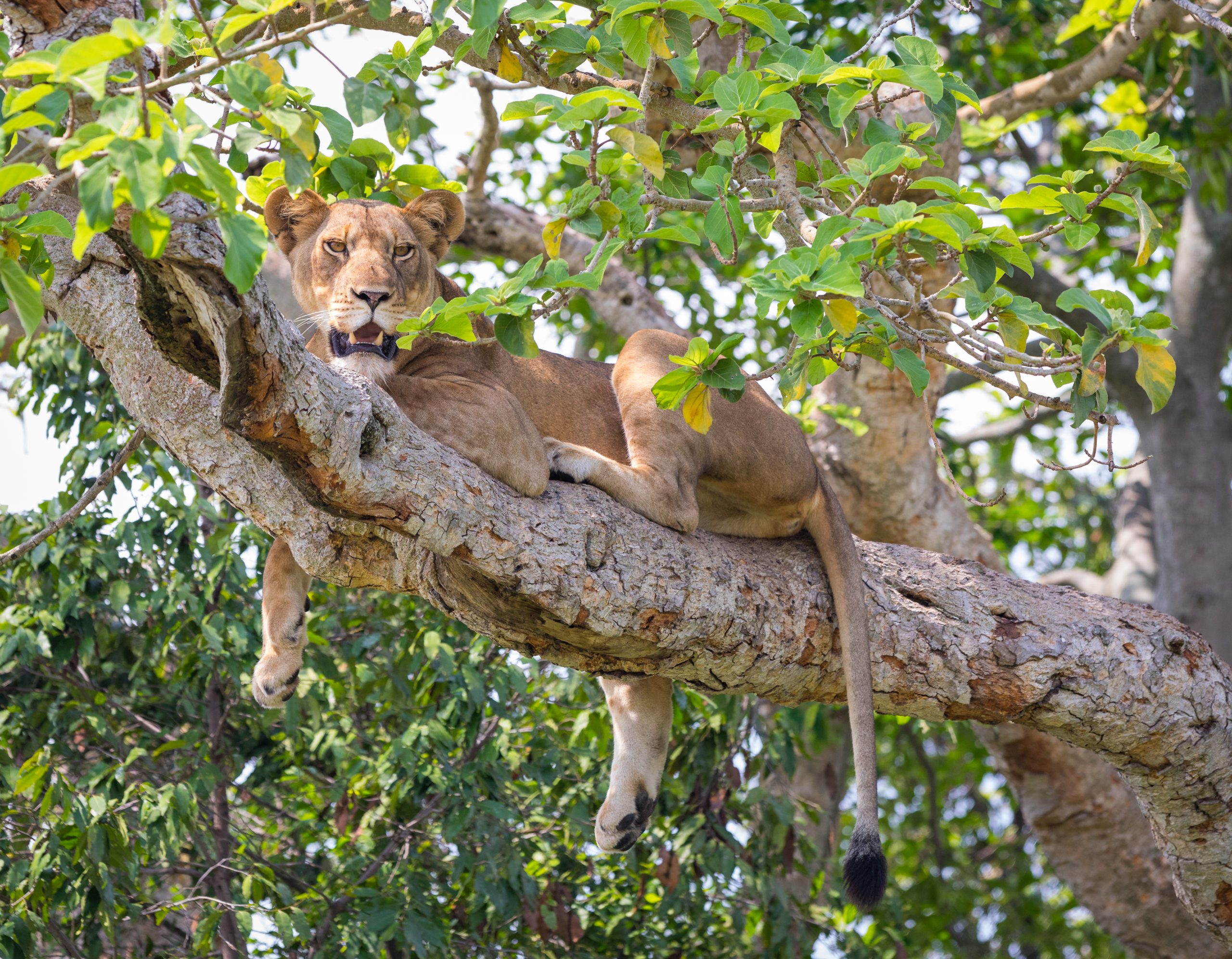
Another compelling theory posits that climbing trees allows the lions to escape the intense midday heat that radiates from the ground, enjoying cooler breezes and shade amongst the branches. Whatever the precise reason, witnessing a full pride draped across the boughs of a large fig tree is an unforgettable experience, a moment of profound connection with the wild that few other safaris can offer. Our expert guides at Ripple Safaris possess an intimate knowledge of the Ishasha sector, knowing the preferred trees and the subtle signs that indicate a pride’s presence, significantly increasing your chances of observing this extraordinary behavior.
The Ishasha sector itself is a vast and wild expanse, characterized by rolling savannahs interspersed with riverine forests. Beyond the tree-climbing lions, it’s an excellent area for spotting other plains game, including large herds of topi, buffalo, and elephants. The sense of wilderness here is palpable, offering a more rugged and adventurous safari experience compared to the park’s busier northern sections. Patience and a keen eye are rewarded, often with sightings that feel deeply personal and exclusive.
Kazinga Channel: Africa’s Best Boat Safari
If there’s one activity in Queen Elizabeth National Park that consistently leaves visitors awestruck, it is undoubtedly the boat safari along the Kazinga Channel. This natural 32-kilometer waterway connects Lake Edward and Lake George, serving as a vibrant artery of life that supports an incredible density of wildlife, making it arguably Africa’s most rewarding boat safari experience. Drifting along its calm waters offers a unique perspective on the park’s inhabitants, often bringing you remarkably close to creatures that would be far more elusive on land.
The channel’s banks are a bustling tableau of animal activity. Here, you’ll encounter one of the world’s highest concentrations of hippos, their colossal forms submerging and resurfacing with rhythmic grunts, often in pods numbering in the hundreds. Nile crocodiles, ancient and formidable, bask motionless on the muddy shores, their reptilian eyes scanning for unsuspecting prey. Elephants and buffalo frequently gather at the water’s edge to drink and cool off, offering superb photographic opportunities as they interact with the tranquil setting.
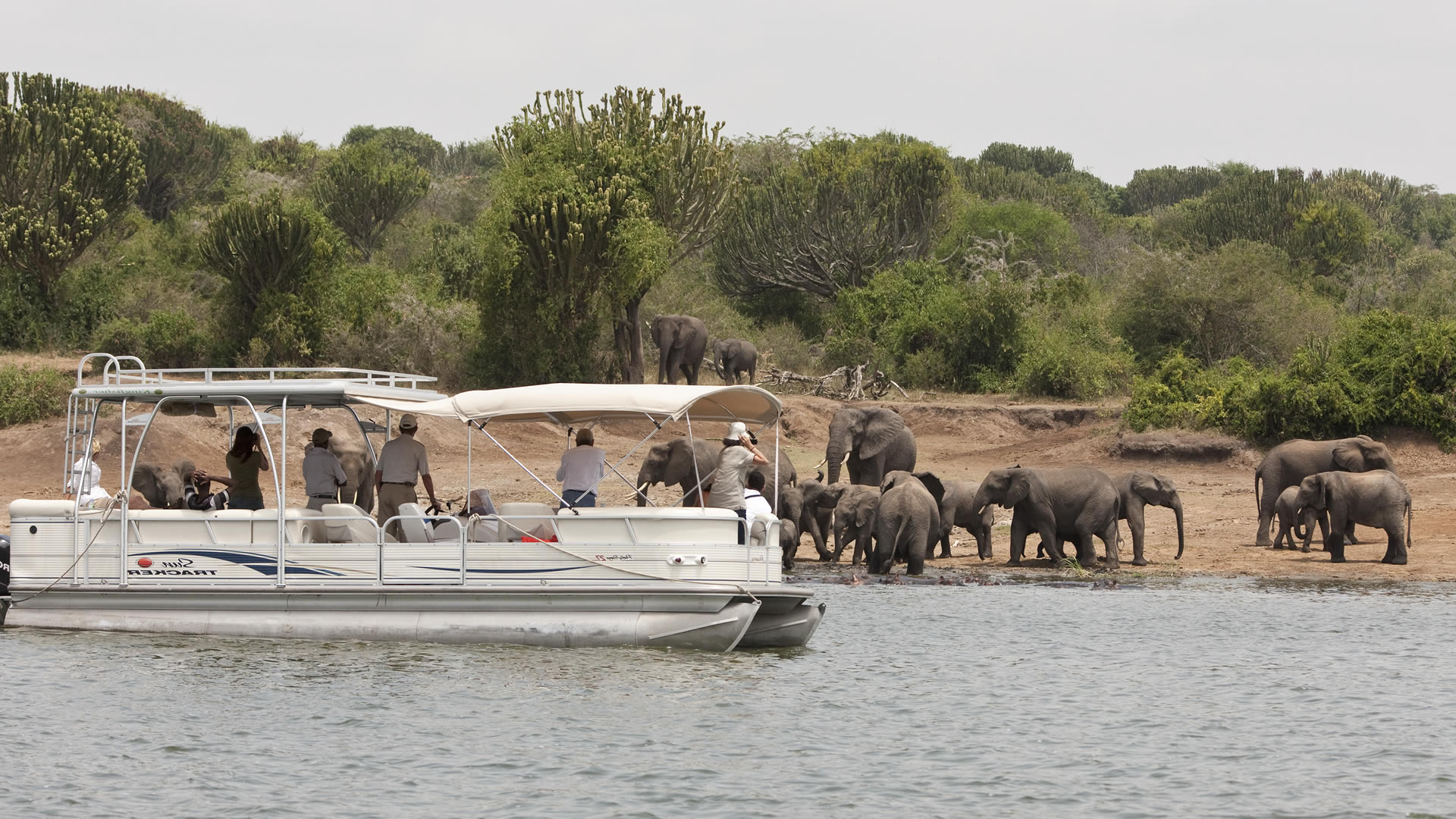
Beyond the megafauna, the Kazinga Channel is a birder’s paradise, a living encyclopedia of avian diversity. Over 600 species have been recorded in the park, and a significant proportion of these can be observed from the comfort of the boat. From the vibrant flash of a malachite kingfisher darting across the water to the majestic fish eagle soaring overhead, and the elegant pink-backed pelicans congregating in large colonies, every moment presents a new feathered spectacle. Our guides are adept at identifying even the most subtle avian species, enriching your understanding of this vital ecosystem.
The experience itself is one of profound tranquility punctuated by thrilling wildlife encounters. The slow, steady pace of the boat allows for prolonged observation, enabling you to truly absorb the sights and sounds of the wild. It’s a chance to witness the intricate relationships between predator and prey, the gentle interactions within herds, and the sheer abundance of life that thrives along this remarkable waterway. A Kazinga Channel boat safari is not just an excursion; it’s an unforgettable journey into the very heart of Queen Elizabeth National Park’s vibrant ecosystem.
Sector-by-Sector Wildlife Breakdown
Queen Elizabeth National Park’s immense biodiversity is best understood by appreciating the distinct characteristics of its various sectors. Each area offers a unique landscape and, consequently, different wildlife viewing opportunities, contributing to the park’s reputation as a microcosm of East African wilderness.
Kasenyi Plains: The Savannah Heartbeat
The vast, open savannahs of the Kasenyi Plains, located in the northeastern part of the park, are the quintessential African safari landscape. This area is renowned for its excellent lion sightings, often seen stalking the abundant Uganda kob, which congregate in large herds across the grasslands. Leopard sightings, though more elusive, are also possible, particularly during dawn and dusk. The flat terrain makes for superb game drives, allowing for clear views of elephants, buffalo, warthogs, and various antelope species. The concentration of prey here naturally attracts predators, making it a prime location for witnessing the drama of the wild unfold.
Mweya Peninsula: Central Hub and Panoramic Views
Nestled between Lake Edward and the Kazinga Channel, the Mweya Peninsula is the park’s administrative and tourism hub. While it offers good general game viewing, including elephants, buffalo, and warthogs frequently seen around the lodges, its primary draw is its strategic location. This is the departure point for the famous Kazinga Channel boat safaris, and its elevated viewpoints offer breathtaking panoramic vistas of the channel, the Rwenzori Mountains, and the surrounding plains. It’s also a great spot for birdwatching, with numerous species found in the acacia woodlands and along the shoreline.
Maramagambo Forest: Primate Encounters and Mysterious Caves
To the southeast lies the ancient Maramagambo Forest, a dense, moist evergreen forest that provides a stark contrast to the open plains. This sector is a haven for primates, including chimpanzees, black-and-white colobus monkeys, red-tailed monkeys, and vervets. Guided forest walks offer the chance to track these agile creatures, providing a different kind of safari experience focused on smaller details and the sounds of the jungle. The forest also hides the mysterious Bat Cave, home to thousands of bats and, famously, a python that preys on them. It’s an area rich in biodiversity, from forest birds to unique plant life.
Ishasha Sector: Home of the Tree-Climbing Lions
As previously highlighted, the Ishasha sector in the park’s south is globally celebrated for its tree-climbing lions. Beyond this extraordinary spectacle, Ishasha’s savannahs are home to large herds of topi, a striking antelope species not commonly found in other parts of the park, as well as significant populations of buffalo and elephants. The area has a more remote and wild feel, making it ideal for those seeking a tranquil and uncrowded safari experience with the added bonus of a truly unique lion behavior.
Kyambura Gorge: Valley of Apes
Often referred to as the “Valley of Apes,” Kyambura Gorge is a dramatic, forested chasm approximately 100 meters deep, carved by the Kyambura River. This isolated forest is home to a habituated community of chimpanzees, offering an incredible opportunity for chimpanzee trekking. Descending into the gorge is an adventure in itself, revealing a micro-ecosystem distinct from the surrounding savannah. Besides chimpanzees, other primates like red-tailed monkeys and black-and-white colobus can be found, along with a rich variety of forest birds. The trek is physically demanding but immensely rewarding, providing an intimate encounter with our closest relatives.
Birdlife: Over 600 Species
Queen Elizabeth National Park is, without exaggeration, a birder’s paradise, boasting an astounding checklist of over 600 avian species. This makes it one of the most biodiverse birding destinations in all of Africa, a testament to its varied habitats. From the open savannahs to the dense forests, and particularly along the aquatic environments of the Kazinga Channel and the crater lakes, every corner of the park teems with feathered life, offering unparalleled opportunities for both seasoned ornithologists and casual enthusiasts.
The Kazinga Channel, as mentioned, is a particular highlight for birdwatching. Here, you can expect to see huge congregations of waterbirds, including the majestic African Fish Eagle, various species of kingfishers (Pied, Malachite, Giant), pink-backed pelicans, cormorants, and a multitude of storks, egrets, and herons. The sheer volume and variety of species along the channel are breathtaking, with many birds easily observable from the comfort of a boat.
Beyond the waterways, the park’s diverse landscapes host an equally impressive array of birds. The Kasenyi Plains are excellent for savannah species such as the Martial Eagle, Grey Crowned Crane (Uganda’s national bird), various plovers, and bustards. The Maramagambo Forest and Kyambura Gorge offer a completely different set of species, including forest dwellers like the Black Bee-eater, White-nnaped Pigeon, and various hornbills. Migratory birds also swell the numbers between November and April, adding to the already rich resident population.
Whether you are captivated by the vibrant plumage of a sunbird, the powerful stoop of a raptor, or the intricate calls echoing through the forest, QENP promises a birding experience that is both rich and rewarding. Our expert guides are not only adept at spotting and identifying these diverse species but also at sharing fascinating insights into their behaviors and ecological roles, enhancing your appreciation for this extraordinary avian sanctuary.
Best Time to Visit and Seasonal Patterns
Choosing the optimal time for a safari in Queen Elizabeth National Park largely depends on your priorities, as each season offers its own unique advantages. Generally, the park experiences two distinct seasons: the dry season and the wet season, each influencing wildlife behavior, vegetation, and accessibility.
The dry season, running from June to September and then again from December to February, is widely considered the best time for game viewing. During these months, the vegetation is sparser, making it easier to spot animals in the bush. Water sources become scarce, compelling wildlife to congregate around the permanent water bodies like the Kazinga Channel, leading to more concentrated and predictable sightings. The roads are also generally in better condition, ensuring smoother game drives and easier access to all sectors of the park. This period is ideal for those focused on maximizing their chances of seeing a wide variety of animals, especially predators.
Conversely, the wet season, from March to May and October to November, transforms the park into a lush, green paradise. While game viewing can be slightly more challenging due to denser vegetation, this period offers several unique benefits. It is the prime time for birdwatching, as migratory birds arrive, and resident species are often in their breeding plumage. The landscape is incredibly scenic, with vibrant flora and dramatic skies, making for stunning photographic opportunities. Furthermore, the wet season typically sees fewer visitors, offering a more exclusive and tranquil safari experience, often at more favorable rates. Roads can become muddy, particularly in remote areas, but with a robust 4×4 vehicle and experienced drivers, most areas remain accessible.
Ultimately, the “best” time is subjective. For classic game viewing and easier access, the dry season is preferable. For birding enthusiasts, photographers seeking lush landscapes, or those desiring a more secluded experience, the wet season holds immense appeal. Regardless of when you choose to visit, QENP’s incredible biodiversity ensures a memorable safari, with its vibrant ecosystems constantly presenting new wonders.
Combining QENP With Gorilla Trekking
One of the most compelling reasons to choose Queen Elizabeth National Park for your Ugandan safari is its strategic location and the ease with which it can be combined with a mountain gorilla trekking experience. Uganda is one of only three countries in the world where these critically endangered primates can be seen in their natural habitat, and pairing this extraordinary encounter with the diverse wildlife of QENP creates an unparalleled African adventure.
QENP is geographically well-positioned relative to both Bwindi Impenetrable National Park and Mgahinga Gorilla National Park, the two primary gorilla trekking destinations in Uganda. A drive from QENP to the northern sectors of Bwindi (Buhoma or Ruhija) typically takes around 4-6 hours, making it a perfectly feasible and logical progression for a multi-faceted safari. This allows you to transition seamlessly from tracking tree-climbing lions and observing vast herds of elephants to trekking through dense montane forest in search of habituated gorilla families.
The combination offers a comprehensive primate and plains game experience that few other African safaris can match. Imagine starting your journey with the thrill of chimpanzee trekking in Kyambura Gorge, then moving on to witness the iconic big game of the Kasenyi Plains, and culminating in the profound and emotional experience of spending an hour with a family of mountain gorillas. This safari trajectory provides an incredible spectrum of wildlife encounters, from the smallest forest creatures to the largest land mammals, and our closest primate relatives.
This synergistic approach allows travelers to maximize their time in Uganda, experiencing the country’s rich biodiversity in a logical and rewarding sequence. Ripple Safaris specializes in crafting such comprehensive itineraries, ensuring seamless logistics, expert guiding, and an unforgettable journey that captures the essence of Uganda’s wild heart. It’s an adventure that not only offers incredible wildlife viewing but also a deep appreciation for conservation efforts in this remarkable corner of the world.
Frequently Asked Questions
What types of accommodation are available in Queen Elizabeth National Park?
Queen Elizabeth National Park offers a range of accommodation options to suit various preferences and budgets, from luxurious lodges perched on the Mweya Peninsula with stunning views to mid-range tented camps and more rustic budget facilities. Many lodges are strategically located to provide excellent access to game viewing areas and the Kazinga Channel.
It’s advisable to book well in advance, especially during the peak dry seasons, as popular lodges can fill up quickly. Consider whether you prefer a central location for easy access to activities or a more remote camp for an enhanced wilderness experience.
Is Queen Elizabeth National Park safe for tourists?
Yes, Queen Elizabeth National Park is generally considered very safe for tourists. The Uganda Wildlife Authority (UWA) maintains a strong presence within the park, with rangers and security personnel ensuring the safety of visitors and wildlife. Safari activities are conducted with strict safety protocols in place.
As with any wilderness area, it’s crucial to follow your guide’s instructions at all times, especially during game drives, walks, and boat safaris. Avoid walking alone at night outside designated areas and respect the wild nature of the animals.
What is the best way to get to Queen Elizabeth National Park?
The most common way to reach Queen Elizabeth National Park is by road from Kampala or Entebbe, a journey that typically takes 6-8 hours depending on traffic and road conditions. This option allows you to experience Uganda’s diverse landscapes along the way and offers flexibility for onward travel.
Alternatively, scheduled or chartered flights are available from Entebbe International Airport to various airstrips near the park, such as Kasese or Mweya. This significantly reduces travel time, making it a convenient option for those with limited time or who prefer to avoid long road journeys.
Are there opportunities for walking safaris or nature walks?
Yes, Queen Elizabeth National Park offers excellent opportunities for walking safaris and nature walks, providing a different perspective on the wilderness. Guided walks are available in areas like the Maramagambo Forest for primate tracking and birding, and around the Mweya Peninsula for general game viewing and scenic vistas.
These walks are always conducted with experienced and armed UWA rangers, ensuring your safety while allowing you to explore the smaller details of the ecosystem. It’s a fantastic way to engage with the environment on foot, observing insects, plants, and tracking animal signs.
What should I pack for a safari in QENP?
For a QENP safari, pack light, neutral-colored clothing (khaki, olive green, brown) to blend in with the environment and avoid attracting insects. Include long-sleeved shirts and trousers for protection against sun and insects, a wide-brimmed hat, sunglasses, and comfortable walking shoes or hiking boots if planning forest treks.
Don’t forget essentials like a good camera with extra batteries, binoculars, insect repellent, sunscreen, a small daypack, and any personal medications. A light jacket or fleece is also recommended for cooler mornings and evenings, especially during the dry season.
Can children participate in all safari activities?
While many activities in Queen Elizabeth National Park are suitable for children, some have age restrictions, particularly for primate trekking. Chimpanzee trekking in Kyambura Gorge, for instance, typically requires participants to be at least 15 years old due to the strenuous nature of the trek and the need for quiet observation.
Game drives and the Kazinga Channel boat safari are generally suitable and highly enjoyable for children of all ages, offering fantastic wildlife viewing opportunities. Always check specific age limits for activities when planning your family safari to ensure everyone can participate fully.