
Meet the Golden Monkey: A Virunga Endemic
In the mist-shrouded peaks and dense bamboo forests of Uganda’s Mgahinga Gorilla National Park, a vibrant splash of gold and orange flashes through the canopy – the unmistakable sign of the golden monkey (Cercopithecus kandti). Often overshadowed by their colossal mountain gorilla neighbours, these captivating primates are, in their own right, an extraordinary highlight for any discerning wildlife enthusiast. They are not merely monkeys; they are a living jewel, endemic exclusively to the Virunga Massif, a chain of eight volcanoes that straddles the borders of Uganda, Rwanda, and the Democratic Republic of Congo.
The golden monkey’s striking appearance is its most immediate charm. Their backs are adorned with a rich, burnished gold, contrasting beautifully with darker limbs and a pale underside. This vivid coloration, coupled with their inquisitive, bright eyes framed by a subtle golden crown, makes them incredibly photogenic and a joy to observe. They are a subspecies of the blue monkey, but their unique golden fur sets them apart, a testament to the evolutionary pressures and distinct habitat of these high-altitude forests.
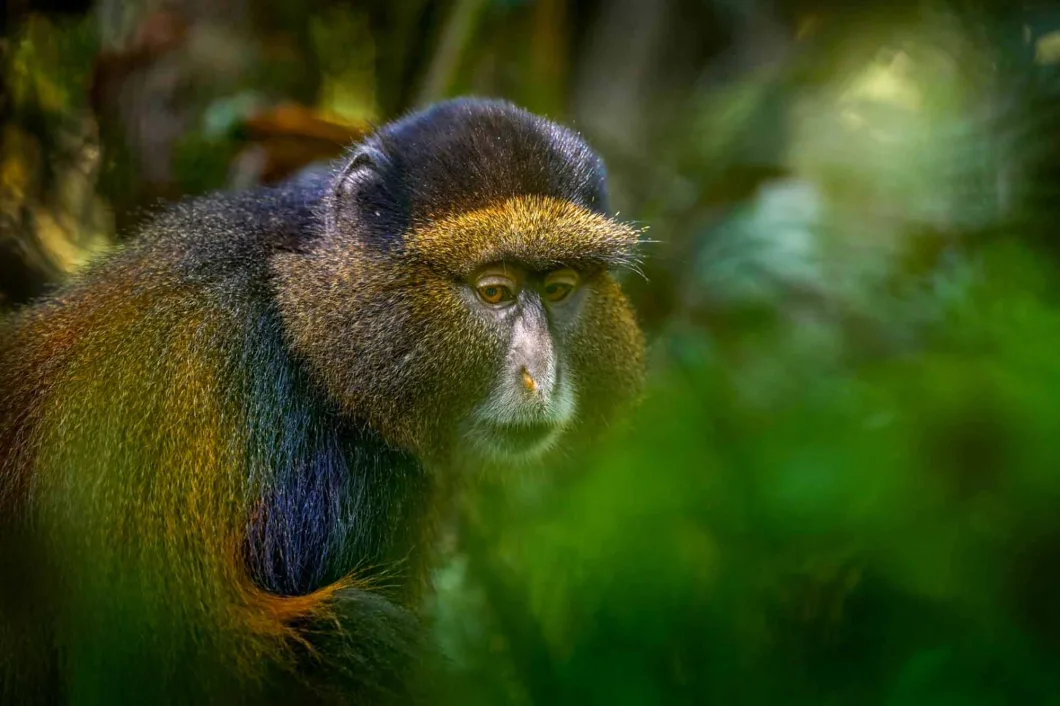
Living primarily on bamboo shoots, leaves, and fruits, these social creatures move with an agile grace that belies their robust build. They are known for their playful antics, often chasing each other through the bamboo thickets, leaping between branches with astonishing dexterity, and occasionally pausing to groom or sunbathe in a shaft of light. Their energetic displays are a stark contrast to the more contemplative demeanour of the gorillas, offering a different, yet equally profound, primate encounter.
Their conservation status as endangered underscores the importance of every trek. Habitat loss and human encroachment have severely impacted their populations, making Mgahinga a vital sanctuary. To witness them in their natural habitat is not just an adventure; it’s a privileged glimpse into a fragile ecosystem and a direct contribution to their continued protection.
Mgahinga vs Volcanoes National Park for Golden Monkeys
While both Mgahinga Gorilla National Park in Uganda and Volcanoes National Park in Rwanda offer opportunities for golden monkey trekking, there are distinct nuances that make Mgahinga a particularly compelling choice. Mgahinga, often lauded for its “where gold meets silver” tagline due to the presence of both golden monkeys and mountain gorillas, provides a more intimate and perhaps less trafficked experience for golden monkey enthusiasts. The smaller size of Mgahinga means that the habituated groups are often more accessible, and the overall atmosphere can feel more secluded and wild.
In Mgahinga, golden monkey trekking typically begins with a briefing at the Ntebeko Visitor Centre, followed by a relatively gentle hike into the bamboo zones on the slopes of Mount Gahinga. The terrain, while still mountainous, can sometimes be less strenuous than certain sections encountered in Volcanoes National Park, depending on the monkeys’ current location. Furthermore, Mgahinga’s unique position as Uganda’s only park hosting both gorillas and golden monkeys allows for unparalleled logistical convenience if you plan to combine both treks within the same park.
Volcanoes National Park, while offering excellent golden monkey encounters, often sees a higher volume of visitors due to its established gorilla tourism infrastructure. The trails can be well-worn, and while the experience is undoubtedly rewarding, Mgahinga offers a distinct sense of venturing into a slightly less explored corner of the Virungas. For those seeking a more exclusive feel, or for travellers already committed to Uganda for gorilla trekking, Mgahinga presents an undeniable advantage, streamlining travel and maximizing precious safari time.
The Virunga Massif is a tapestry of volcanic peaks, each one a unique ecosystem. To encounter the golden monkey here is to witness a species perfectly adapted to this high-altitude, bamboo-rich environment, a true specialist of the Afro-montane forest.
Trekking Conditions in the Virunga Foothills
Trekking for golden monkeys in Mgahinga Gorilla National Park is an exhilarating immersion into the heart of the Virunga foothills, an experience defined by lush vegetation, varying terrain, and the invigorating mountain air. The park’s altitude ranges from 2,227m to 4,127m, meaning trekkers will navigate slopes that can be gentle at times, but also steep and challenging, particularly when the monkeys lead the pursuit uphill through dense bamboo forests.
The trails are generally well-maintained but can become muddy and slippery, especially during and after rainfall, which is common in this equatorial region. Sturdy, waterproof hiking boots with good ankle support are absolutely essential. Long trousers and long-sleeved shirts are recommended to protect against nettles, thorns, and insects, while a waterproof jacket or poncho is a wise addition to any packing list, regardless of the season. The guides and trackers are incredibly skilled, navigating the forest with an intimate knowledge of the monkeys’ habits and the terrain.
While the trek is generally considered less arduous than a full-day gorilla trek, the pace can be surprisingly brisk as the golden monkeys are incredibly active and fast-moving. Expect to spend anywhere from 2 to 5 hours in the forest, including the precious hour of direct observation. Porters are available for hire at the park headquarters, providing invaluable assistance with carrying daypacks and offering a steadying hand on trickier sections, all while directly supporting local communities. The physical demands are moderate to challenging, but the reward of witnessing these vibrant primates in their natural, dynamic world far outweighs any exertion.
Photography: Colour, Movement, and Canopy Light
Capturing the essence of golden monkeys through the lens is a photographer’s delight and a unique challenge. Their striking golden-orange fur against the emerald green of the bamboo forest provides a spectacular colour palette, but their constant motion and the dappled light filtering through the dense canopy demand quick reflexes and a keen eye. The Virunga foothills present a dynamic environment where light conditions can change rapidly, from bright sunshine to overcast skies, often within minutes.
For successful photography, a fast lens is paramount. A telephoto zoom lens (e.g., 70-200mm or 100-400mm) is ideal for capturing their expressions and actions from a respectful distance. Given the low light conditions often encountered under the forest canopy, a wide aperture (f/2.8 or f/4) will be your best friend, allowing you to maintain faster shutter speeds to freeze their rapid movements. Don’t be afraid to increase your ISO settings; modern cameras handle higher ISOs very well, and a sharp, slightly noisy image is always preferable to a blurry one.
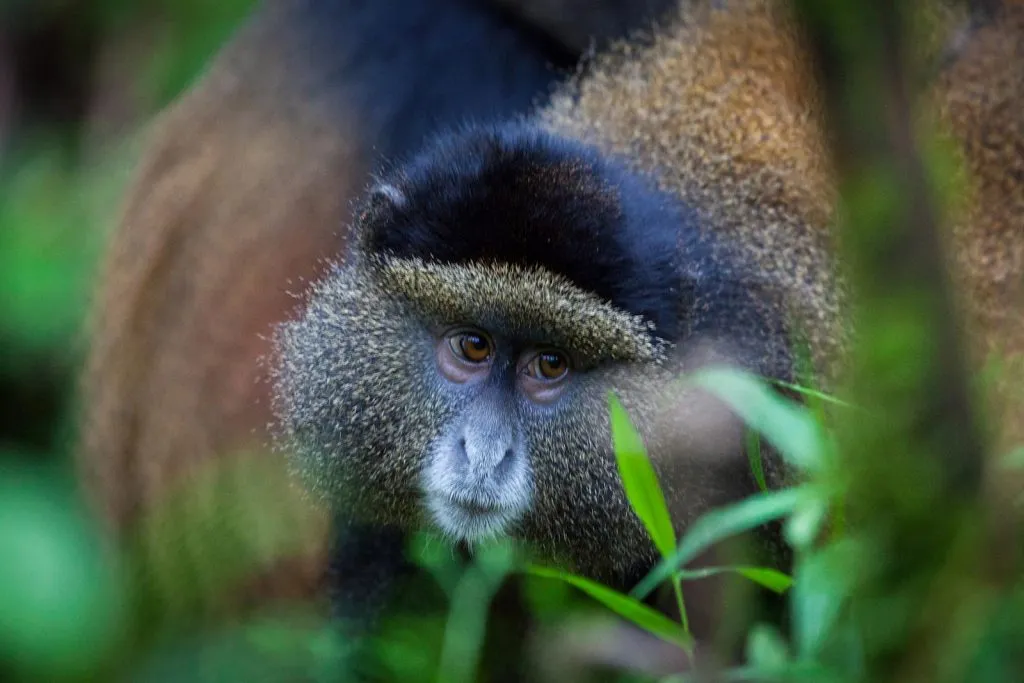
Focusing on their eyes is key to bringing your images to life, conveying their intelligence and curiosity. Anticipate their movements; golden monkeys rarely stay still for long. Try to capture them mid-leap, grooming each other, or foraging amongst the bamboo. The backdrop of the Virunga volcanoes, if you’re lucky enough to catch a glimpse through the trees, can add a breathtaking sense of place to your wider shots. Remember to also capture the details – their expressive hands, the texture of their fur, and the intricate patterns of the bamboo that form their home. Patience and observation will lead to those truly memorable shots.
Combining Golden Monkeys With Gorilla Trekking
One of Mgahinga Gorilla National Park’s most compelling attributes, and indeed a significant draw for any primate enthusiast, is the unique opportunity to combine golden monkey trekking with mountain gorilla trekking within the same park. Unlike other destinations where these two iconic experiences might require separate permits, different logistical arrangements, or even cross-border travel, Mgahinga offers a seamless “gold meets silver” adventure, all within its compact, breathtaking boundaries. This synergy makes for an incredibly rich and efficient primate safari.
Imagine the profound experience of spending a morning with the gentle giants, observing a family of mountain gorillas as they forage, play, and interact, followed by an afternoon or a subsequent morning dedicated to the energetic and vibrant golden monkeys. This dual encounter provides an unparalleled contrast in primate behaviour and ecology. The gorillas offer a sense of quiet majesty and profound connection, while the golden monkeys bring an exhilarating burst of playful energy and vivid colour.
Logistically, combining these treks in Mgahinga significantly simplifies planning. You arrive at one park headquarters, access permits for both activities, and embark on treks that originate from the same general area. This reduces travel time between locations, allowing more time for wildlife encounters and relaxation. For those with limited time or a desire to maximize their primate experiences without extensive transfers, Mgahinga stands out as the premier destination. Ripple Safaris often recommends this combination, recognizing the immense value and depth it adds to a Ugandan safari, offering a holistic immersion into the unique biodiversity of the Virunga Massif.
Booking both permits well in advance is crucial, especially if you plan to trek gorillas, as those permits are highly sought after. Discussing your preferences with your safari specialist will ensure a perfectly timed itinerary that allows for both incredible experiences without feeling rushed.
Permits, Logistics, and Best Season
Securing permits for golden monkey trekking in Mgahinga Gorilla National Park is a straightforward process, though advance booking is always advisable, particularly during peak seasons or if you plan to combine it with gorilla trekking. A golden monkey trekking permit in Uganda is significantly less expensive than a gorilla permit, making it an accessible and highly rewarding activity. Permits can be obtained through the Uganda Wildlife Authority (UWA) or, more commonly and conveniently, arranged by your safari operator.
Logistically, Mgahinga is located in southwestern Uganda, accessible by road from Kampala (approximately 8-10 hours) or by domestic flight to Kisoro Airstrip, followed by a short road transfer. The park headquarters at Ntebeko serve as the starting point for all treks. Treks typically begin with a briefing at 7:30 AM or 8:00 AM, where visitors are assigned to groups and introduced to their guides and trackers. The duration of the trek can vary, but the time spent with the golden monkeys once located is strictly limited to one hour to minimize disturbance and habituation stress.
Golden monkey trekking is possible year-round in Mgahinga due to its equatorial location and the monkeys’ non-migratory habits. However, the dry seasons (June to August and December to February) are generally considered the best times to visit. During these months, rainfall is lower, trails are less muddy, and trekking conditions are generally more favourable. The wet seasons (March to May and September to November) can bring more challenging trekking conditions due to heavy rains, but the forest is incredibly lush, and photography can be enhanced by the soft, diffused light. Regardless of the season, the experience of encountering these energetic primates is consistently exceptional.
- Permit Cost: Significantly lower than gorilla permits, offering great value.
- Booking: Highly recommended in advance, especially for combination treks.
- Access: Road from Kampala or domestic flight to Kisoro.
- Start Time: Briefing usually around 7:30-8:00 AM at Ntebeko.
- Observation Time: Strictly one hour with the monkeys.
- Best Seasons: Dry seasons (June-August, Dec-Feb) for easier trekking; wet seasons (March-May, Sept-Nov) for lush scenery and unique light.
What Most Visitors Miss at Mgahinga
Many visitors to Mgahinga Gorilla National Park, understandably focused on the headline acts of gorillas and golden monkeys, often overlook the broader ecological and cultural richness that defines this compact yet incredibly diverse park. Mgahinga is more than just a primate haven; it is a vital component of the Virunga Conservation Area, protecting not only its charismatic primates but also a unique Afro-montane ecosystem that supports a wealth of other species, many of which are often missed by those rushing through.
Beyond the primates, the park is home to a variety of other mammals, including forest elephants, buffalo, duikers, and a remarkable array of birdlife. Birdwatchers, in particular, will find Mgahinga a treasure trove, with over 115 recorded species, including several Albertine Rift endemics. Taking the time for a guided birding walk or simply being attentive during your primate treks can reveal stunning avian spectacles, from the Rwenzori Turaco to the Handsome Francolin. The sheer biodiversity of the forest undergrowth, from unique flora to fascinating insects, often goes unnoticed amidst the excitement of primate encounters.
Furthermore, the Batwa Cultural Trail offers a profound insight into the lives of the Batwa Pygmies, the forest’s original inhabitants. This trail, led by Batwa guides, provides a respectful and educational opportunity to learn about their traditional way of life, their deep connection to the forest, and the challenges they face today. It’s a powerful experience that adds a crucial human dimension to the wildlife adventure, offering a chance to understand the intricate relationship between people and the natural environment in this unique part of the world. Engaging with this cultural aspect enriches the safari far beyond just wildlife viewing.
Frequently Asked Questions
What is the minimum age for golden monkey trekking in Mgahinga?
The minimum age for golden monkey trekking in Mgahinga Gorilla National Park is generally 12 years old. This age limit is put in place to ensure that participants can handle the physical demands of the trek and maintain the necessary quiet and respectful demeanor around the monkeys.
While less strenuous than gorilla trekking, the trails can be challenging, and children below this age may find it difficult to keep up or remain patient during the search. It also helps ensure the safety of both the trekkers and the habituated monkey groups.
How long does a golden monkey trek typically last?
A typical golden monkey trek in Mgahinga can last anywhere from 2 to 5 hours, including the initial briefing and the hike to and from the monkey location. The actual time spent observing the golden monkeys once they are found is strictly limited to one hour.
The duration of the hike depends entirely on the monkeys’ movements and where they are foraging on a given day. They are active and sometimes range widely, requiring trackers to cover significant ground to locate them.
What should I wear for golden monkey trekking?
For golden monkey trekking, it is crucial to wear sturdy, waterproof hiking boots with good ankle support, as trails can be muddy and uneven. Long trousers and long-sleeved shirts are highly recommended to protect against scratches, nettles, and insect bites in the dense forest.
Additionally, bring a waterproof jacket or poncho, as rain can occur at any time, and wear comfortable socks. A hat, gardening gloves for gripping vegetation, and a small daypack with water and snacks are also advisable for a comfortable experience.
Are golden monkeys dangerous to humans?
Golden monkeys are generally not considered dangerous to humans. They are wild animals, and while habituated to human presence, they maintain a natural caution and distance. Trekkers are instructed to keep a respectful distance and avoid direct interaction.
Aggressive behaviour is extremely rare and usually only occurs if they feel threatened or provoked. Following your guide’s instructions and maintaining a calm, non-threatening presence ensures a safe and enjoyable encounter for both you and the monkeys.
Can I combine golden monkey trekking with other activities in Mgahinga?
Absolutely, combining golden monkey trekking with other activities is one of Mgahinga’s greatest strengths. The most popular combination is with mountain gorilla trekking, allowing you to experience both “gold and silver” primates in a single park.
Other activities include the Batwa Cultural Trail, volcano hiking (Mount Gahinga, Mount Sabyinyo, Mount Muhabura), and various nature walks. Mgahinga’s compact size and diverse offerings make it ideal for a multi-faceted primate and cultural experience.
What is the best way to get to Mgahinga Gorilla National Park?
The most common way to reach Mgahinga Gorilla National Park is by road from Kampala, which typically takes 8-10 hours, offering scenic views of Uganda’s countryside. Alternatively, you can opt for a domestic flight from Entebbe International Airport to Kisoro Airstrip, which significantly reduces travel time to about an hour.
From Kisoro, it’s a relatively short road transfer to the park headquarters at Ntebeko. Many visitors also combine Mgahinga with other parks in southwestern Uganda, such as Bwindi Impenetrable National Park, for a comprehensive safari circuit.